What Is Convex Engraving? Definition, Uses & Procedure

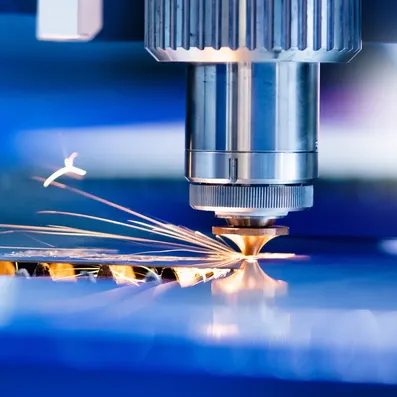
Convex engraving is an engraving technique where the area around a design is removed, usually using a high-powered laser. The laser ablates the material surrounding the design — be it lettering or geometric shapes — and gives the piece an embossed or 3D appearance.
This article will discuss what convex engraving is, how it works, the materials that can be used, as well as some common examples of the technique.
What Is Convex Engraving?
Convex engraving is an engraving method in which the material around a pattern or artistic design is removed, typically with a laser. This removal process results in the design being elevated above the surrounding engraved sections. The engraved area is created via either a rastering or a vector engraving process. Rastering essentially colors the areas around the pattern with a laser, whereas the vector technique creates the impression of shading by engraving multiple lines very close to each other.
Convex engraving is commonly used to engrave graphical designs and letters. Applications can include sign boards, art pieces, and commemorative items. Convex engraving is not well suited to intricate designs; small details can get lost at the edges where the material gets removed.
Early types of convex engraving date as far back as ancient Rome, where artisans developed tools to create coins.
The first laser engraving process was demonstrated in 1978, just over a decade after the invention of the first CO2 laser cutting machine. The first implementation of convex engraving is, however, not documented.
What Is the Process of Convex Engraving?
Convex engraving requires higher power levels than standard engraving. The laser must not merely mark the surface but rather remove enough material so that the design has a 3-dimensional or embossed appearance. The acceptable laser power and engraving speed depend upon the material being cut. In some cases, multiple passes are needed to achieve deeper cuts. The best type of laser for this application is a pulsed fiber laser. These lasers can provide sufficient power density for convex engraving on metals.
What Are the Materials That Can be Used for Convex Engraving?
Convex engraving is most commonly performed on materials such as wood, leather, and plastic. This is because these materials do not require high-powered machines. In addition to this, these materials can accept deeper engravings which make the designs stand out more while also producing a darker color in the engraved portions. With a powerful enough laser, convex engraving can also be performed on steel, aluminum, brass, and even ceramics.
What Are the Examples of Convex Engraving?
Convex engraving can be used to create complex and intricate patterns where only the background is engraved, leaving the design itself as untouched material.
The darker areas are engraved, whereas the rest is not touched during engraving. Popular examples include: signs, logos, firearm grips and stocks, and jewelry. Figure 2 above shows an example of convex engraved coins. The darker areas have been engraved with the laser and the metallic parts have been left untouched to create a 3D effect.
What Are the Industries that Use the Convex Engraving Method?
Convex engraving is primarily an aesthetic technique and does not find much practical use in industrial settings. It is mainly used in the industries listed below:
- Art: Convex engraving is often used on art pieces, provided these pieces do not have excessively complex designs.
- Jewelry: Jewelry can be engraved with relatively complex designs using the convex engraving technique.
- Advertising: Business signs and labels are often produced using convex engraving. The method produces a very aesthetically pleasing product, especially if performed on natural materials like wood.
How to Use Convex Engraving?
The list below indicates the steps involved in convex engraving:
- Prepare the Design: Convert the design into a format that can be read by the engraving machine. Most laser engravers have recommended CAM software that can convert digital artwork into machine instructions.
- Select & Secure Material: Select the material, and secure it onto the laser engraving bed. This can be done with clamps or double-sided tape. The laser does not impart any force on the material during engraving.
- Set Laser Parameters: Select the cutting parameters. The laser power and engraving speed depend on the material being cut. Machine suppliers will often provide a list of materials and their corresponding settings for optimal results.
- Engrave: Engrave the part. Ensure that the machine is properly ventilated. If a flammable material is being engraved, supervise the machine during cutting in case a fire breaks out.
Frequently Asked Questions About Convex Engraving
Summary
This article presented convex engraving, explained what it is, and discussed the process and its applications. To learn more about convex engraving, contact a Xometry representative.
Xometry provides a wide range of manufacturing capabilities, including sheet cutting and other value-added services for all of your prototyping and production needs. Visit our website to learn more or to request a free, no-obligation quote.
Disclaimer
The content appearing on this webpage is for informational purposes only. Xometry makes no representation or warranty of any kind, be it expressed or implied, as to the accuracy, completeness, or validity of the information. Any performance parameters, geometric tolerances, specific design features, quality and types of materials, or processes should not be inferred to represent what will be delivered by third-party suppliers or manufacturers through Xometry’s network. Buyers seeking quotes for parts are responsible for defining the specific requirements for those parts. Please refer to our terms and conditions for more information.