Differences Between Laser and Flame Cutting

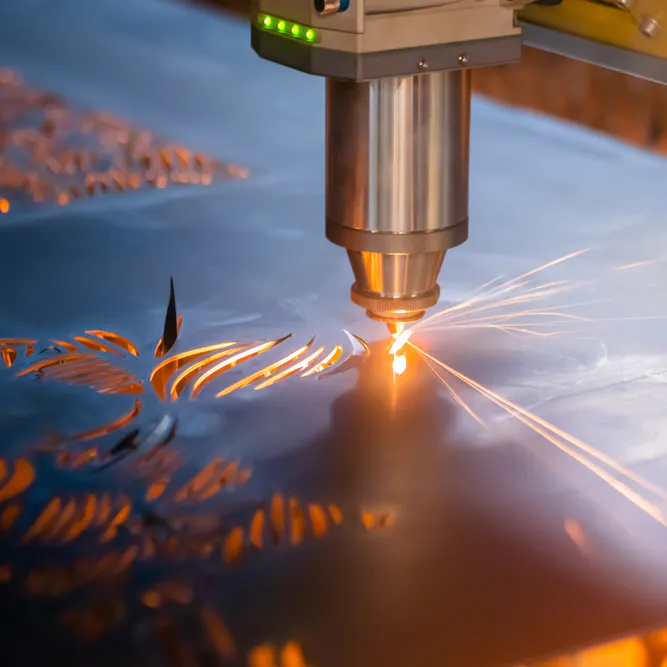
Flame cutting makes use of an oxygen-acetylene gas mixture to cut through metal. The flame is directed at the material, heating it to a high temperature and burning away a small portion to create the cut. On the other hand, laser cutting uses an extremely powerful laser beam to make precise and accurate cuts. Laser cutting is great for intricate designs while flame cutting is better suited to thicker materials. This article will explore the differences between the two by weighing the pros and cons of laser cutting vs. flame cutting.
What Is Flame Cutting?
Flame cutting, also known as oxy-fuel cutting, slices through metal using an oxygen-acetylene gas mixture. The flame is directed at the material which then heats to a high temperature and burns away. This method can cut through many types of metals but is best suited for thicker materials. The process is fairly simple and cost-effective, making it a popular choice for many businesses.
The setup for flame cutting often includes a cutting torch, an oxygen cylinder, and an acetylene cylinder. The gas is fed to the cutting torch via hoses. A spark from the torch ignites the oxygen and acetylene gasses which burn hot enough to vaporize metal. The process’ upper temperature of about 3,500°C means even metals with high melting points can be cut this way.
What Is Laser Cutting?
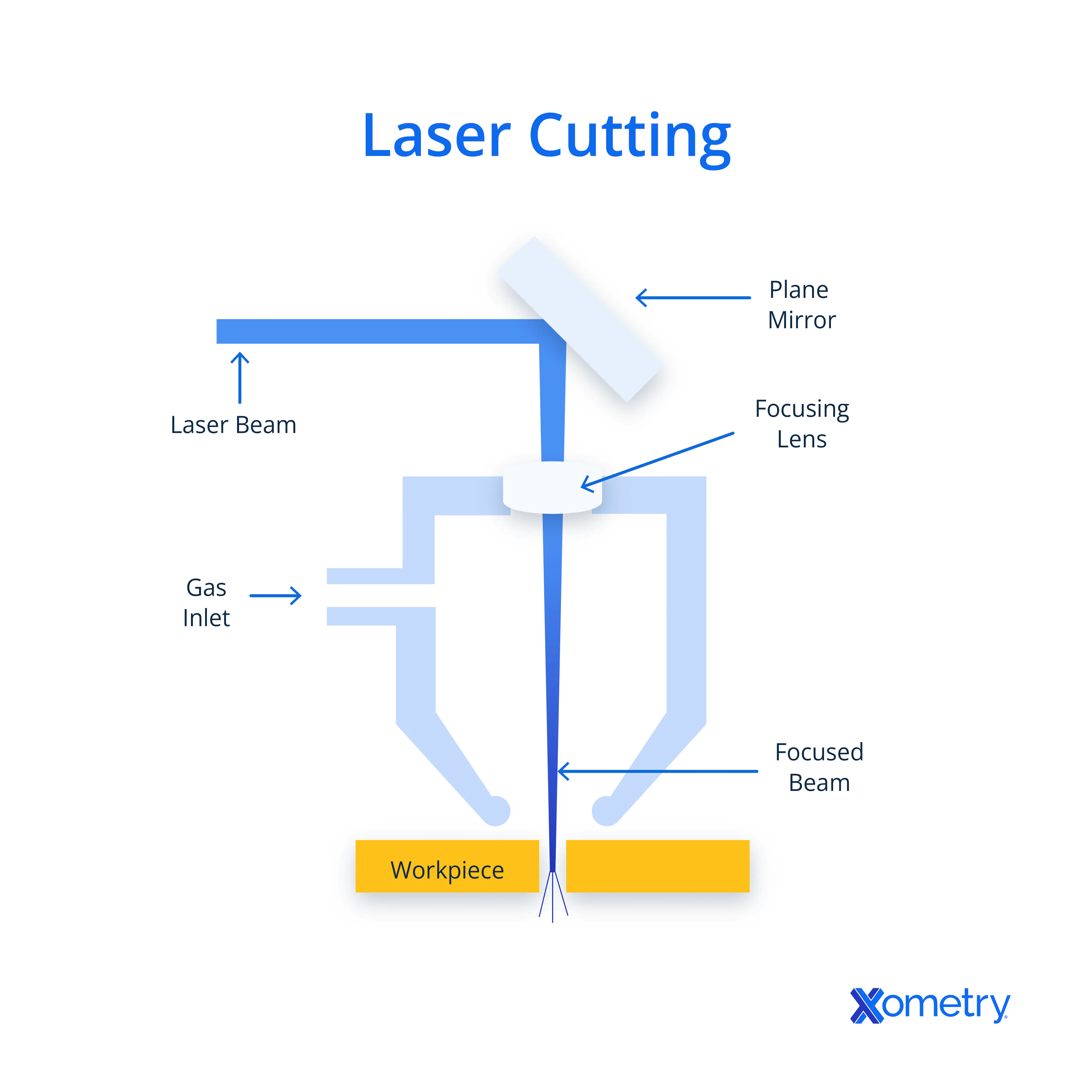
Laser cutting is the use of laser light to cut through the material. A laser beam is concentrated through a lens which then focuses it on a specific area. This laser beam is so powerful that it can cut through materials with a high degree of accuracy and precision. Laser cutting works well on materials such as: acrylic, wood, paper, and metals. It also allows you to make intricate designs that are difficult or impossible to achieve with flame cutting.
Laser cutters are complex and expensive machines, ranging from basic laser cutters to laser engravers. They often require a cooling system and a high-end power source to operate correctly. The laser emitter moves over the material very precisely, usually under computer control. Specialized optics focus the laser beam and guide it along the path of the cut.
To learn more, see our guide on What is Laser Cutting.
What Are the Differences Between Laser and Flame Cutting?
When comparing laser cutting vs. flame cutting, the following are key factors to consider:
- Versatility: Laser cutting is the more versatile option. It is compatible with a wider range of materials, including both metals and nonmetals. And since laser cutters are pre-programmed, they’re easier to automate for large-scale production runs. Flame, on the other hand, is only a valid technique for metals, and is a much slower process.
- Cutting Accuracy: The accuracy of laser cutting is far superior to that of flame cutting. The laser beam is focused into a very fine diameter and can achieve an accuracy of up to 0.0005 inches (0.0127 mm). This level of precision is not possible with flame cutting, so laser cutting is the preferred choice for intricate designs or tight tolerances.
- Cutting Quality: The laser beam creates a clean and smooth finish with no burrs or sharp edges. This is especially useful when working with materials like acrylic and wood which may demand smooth finishes. On the other hand, the less precise focus of a flame cutter lets some melted material solidify on the edges, ultimately leaving behind a rough finish.
- Cutting Waste: Laser cutting generates very little material waste, as the laser beam is extremely precise and accurate. By contrast, flame cutters melt far more material on a single pass and also create imperfect edges that may need to be filed down later. Overall, much more metal gets lost as a result.
- Cutting Materials: Since laser cutting can cut through both metals and nonmetals, it is the more versatile option when it comes to material selection. Flame cutting can only operate on metals, so laser cutting is the better choice for more complex projects.
- Nuisance During the Cutting Process: The laser cutting process is relatively quiet and safe, with fewer gasses or fumes getting emitted during the process. On the other hand, flame cutting is a noisy and potentially hazardous process involving flammable gasses and an open flame. The flame devices also need more frequent maintenance than laser cutters because the laser heads have fewer moving parts. However, laser cutting is not without its maintenance requirements; laser heads must be cleaned and serviced regularly. And since the machines are potent cutting implements by nature, all operators must be trained in laser safety.
What Are the Differences in Tools Used by Each Method?
Each method differs in the tools and equipment they require. For laser cutting, only specialty laser machines will properly direct laser beams onto the material. Flame cutting requires an oxy-acetylene gas torch and associated equipment to create a high-intensity flame.
Which Is More Expensive - Laser or Flame Cutting?
Laser-cutting machines are usually more expensive than flame cutters due to their complexity and the cost of laser equipment and supplies. However, laser cutting can be more economical for large-scale production runs because it is precise and easy to automate.
Flame cutting, on the other hand, is often cheaper and better suited for smaller projects where accuracy is less important. Ultimately, the price difference between laser cutting and flame cutting depends on the size of the project, material selection, and the specific equipment. The price of a laser-cutting machine ranges from $25,800 to $122,000 while that of a flame-cutting machine is somewhere between $2,800 and $3,500.
When Should You Use Laser or Flame Cutting?
The choice between laser cutting and flame cutting depends on the project at hand. As laser cutting is more versatile, precise, and economical for large-scale production runs, it is more often selected for intricate designs or projects where accuracy and waste reduction are key. Flame cutting, meanwhile, is better suited for smaller, metal-only projects in which accuracy is not as important. Ultimately, it’s important to evaluate the project at hand and consider both options to determine which will be more cost-effective and efficient.
To learn more, see our guide on Laser Cutting Examples.
What Are the Safety Procedures for Each Method?
Laser cutting and flame cutting can both potentially harm operators, so it is important to take safety precautions when using either method. As laser cutters use high-energy laser beams, their operators must always protect their eyes from laser radiation. Laser operators should also wear protective clothing and respirators when cutting materials.
When flame cutting, operators must ensure that the area is well-ventilated and free from flammable materials. Operators should also wear protective clothing and respirators to protect them from hazardous fumes. Operators of both laser-cutting and flame-cutting devices need suitable eye protection to guard against sparks and debris.
Can Flame Cutting be Used to Engrave Markings?
No, flame cutting cannot be used for engraving. It is designed specifically to cut through metal. The process is not precise enough to produce intricate engravings or fine markings. Laser cutting, on the other hand, can create precise and detailed designs with laser beams, making laser cutting the better option for engraving.
Can Laser Cutting be Used to Cut Through Thick Materials?
Yes, lasers can cut through thick materials as long as they have enough power. High power typically means a larger laser head. Laser cutting of thick materials can also require additional laser head passes, which will thus reduce overall cutting speeds and make the operation more expensive.
Can Laser and Flame Cutting Cut Steel?
Yes, laser cutting and flame cutting can both be effective on steel. The process of laser cutting is usually more precise and faster than flame cutting, but it’s also more expensive. Flame cutting is less precise and typically slower, but is often more economical for smaller projects.
Ultimately, the best choice will depend on the project size, material, and equipment. Flame cutting gains the upper hand against very thick steel plates because laser output power has more limits than oxy-acetylene output.
Frequently Asked Questions About the Differences Between Laser Cutting and Flame Cutting
Summary
This article presented the differences between laser and flame cutting, explained each of them, and discussed its various applications. To learn more about copper, contact a Xometry representative.
Xometry provides a wide range of manufacturing capabilities, including casting and other value-added services for all of your prototyping and production needs. Visit our website to learn more or to request a free, no-obligation quote.
Disclaimer
The content appearing on this webpage is for informational purposes only. Xometry makes no representation or warranty of any kind, be it expressed or implied, as to the accuracy, completeness, or validity of the information. Any performance parameters, geometric tolerances, specific design features, quality and types of materials, or processes should not be inferred to represent what will be delivered by third-party suppliers or manufacturers through Xometry’s network. Buyers seeking quotes for parts are responsible for defining the specific requirements for those parts. Please refer to our terms and conditions for more information.