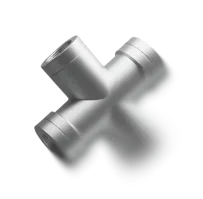
T slot Aluminum: Extrusions and Framing


T-slot aluminum refers to a type of framing system made from aluminum extrusions that feature slots along the sides. The T slots allow for easy connection and adjustment of various components, making T-slot aluminum versatile in building structures. T slot Aluminum extrusions and framing provide a versatile method for creating structural frames without the requirement for welding. T-slot works by allowing aluminum extrusions to be fastened together using T-nuts and bolts that slide into the slots. The system provides flexibility in design and assembly, offering a customizable solution for creating frames, enclosures, or supports in a wide range of applications. Engineers use the system for industrial workstations, laboratory furniture, and machine guards. Standard alloy grades for the extrusions include 6061-T6 or 6063-T5 to ensure structural integrity. The modular nature allows for rapid assembly and reconfiguration of complex assemblies.
The system relies on T-nuts and bolts that slide into the channels to lock components in place. Surface finishes usually include clear or black anodizing to prevent corrosion and improve aesthetics. Metric and fractional sizes are available to meet global engineering standards. Profile dimensions range from 15 millimeters to over 200 millimeters for metric series. Heavy-duty versions provide thicker walls for increased load-bearing capacity. The lightweight nature of aluminum reduces shipping costs and simplifies manual assembly. Framing systems integrate with panels (acrylic or polycarbonate) using plastic gaskets. The flexibility of the system supports rapid prototyping in robotics and automation. Total assembly weight remains low compared to welded steel structures.
What is T Slot Aluminum?
T slot aluminum is an extruded aluminum profile with slots shaped like a “T” used for modular framing systems. The cross-sectional design allows for the insertion of nuts and bolts at any point along the length of the rail. Components slide into the grooves and lock securely when the fastener is tightened. The mechanical connection eliminates the requirement for permanent joining methods (welding or brazing). T slot aluminum enables flexible design through the use of standardized parts and connectors. Modular construction facilitates easy adjustments to the frame height or width during the assembly process. Engineering systems rely on the material for building conveyor supports, cleanroom structures, and retail displays. The extruded profiles provide high strength-to-weight ratios and efficient load distribution compared to solid steel bars of the same weight. Anodized coatings protect the aluminum from oxidation in humid environments. The 100% recyclability of the metal makes the system a sustainable choice for manufacturing infrastructure. Precision tolerances typically follow industry standards such as Aluminum Association (AA) standards, often falling within +/- 0.005 inches to +/- 0.015 inches depending on profile size.
How Does T Slot Aluminum Work?
T slot aluminum works by utilizing a unique geometric channel that acts as a captive track for mounting hardware. The T-shaped groove holds the head of a bolt or a specialized T-nut securely within the profile. Tightening the fastener creates a clamping force against the inner flanges of the slot. Friction and mechanical interlock prevent the joint from slipping under load. The system allows for infinite adjustability because the hardware resides anywhere along the continuous track. Multiple profiles connect using corner brackets, joining plates, or internal fasteners. The design permits the integration of accessories (hinges, handles, and sensors) without drilling holes. Assembly requires basic hand tools (hex keys or wrenches). The modular interface ensures that components from different manufacturers remain compatible if the slot dimensions match. Rigid structures form as the fasteners pull the aluminum surfaces together. The simplicity of the mechanism reduces the need for specialized labor during construction. Structural integrity depends on the torque applied to the fasteners.
How Are T Slot Extrusions Made From Aluminum?
T slot extrusions are made from aluminum by forcing heated aluminum through a shaped die to create the specific T-slot profile. The process begins with an aluminum billet heated to temperatures from 800°F to 900°F. A hydraulic ram pushes the softened metal through a steel die containing the negative image of the T-slot. The metal emerges from the die in a continuous length with the desired cross-section. Cooling occurs via air or water quenching to stabilize the dimensions. Stretching the profiles after extrusion ensures straightness and removes internal stresses. The metal undergoes artificial aging in ovens to reach the required hardness (T5 or T6 temper). The manufacturing process ensures uniformity across long production runs. Extrusion allows for the creation of complex internal cavities that reduce weight without compromising stiffness. Precision tolerances range from [0.005 to 0.015] inches depending on the profile size. The method produces smooth surface finishes ready for anodizing or powder coating.
Is Extruded Aluminum Stronger Than Standard Aluminum? Extruded aluminum is stronger due to its shaped structure and controlled manufacturing process. The extrusion process aligns the grain structure of the metal along the length of the profile. Geometric designs (hollow centers and internal ribs) increase the moment of inertia for the part. The mechanical advantage allows the profile to resist bending and twisting effectively compared to a solid bar of equal weight. Profiles add rigidity by distributing loads across a larger surface area. Strength depends on the specific alloy and temper selected for the extrusion. 6061-T6 aluminum provides a yield strength of 276 MPa. Standard cast aluminum exhibits lower tensile properties and higher porosity. Heat treatment during the extrusion cycle optimizes the mechanical performance of the material. It improves performance in structural applications (building frames and aerospace components). The ability to place more material in high-stress zones makes extruded shapes efficient. It supports structural use in heavy-duty machinery.
Why is T Slot Framing Popular in Construction and Design?
T slot framing is popular in construction and design due to its modular and adjustable nature, which allows for easy assembly and modification. The system serves as an industrial equivalent to a construction set. No welding is required to create complex 3D structures. Components remain reusable for future projects if the original design becomes obsolete. The flexibility saves time and cost during the prototyping phase of product development. The absence of heat-based joining prevents material distortion and eliminates the need for painting. Rapid prototyping benefits from the ability to change the frame configuration in minutes. Construction sites use the framing for temporary partitions and safety barriers. Design professionals value the clean aesthetic of the silver or black anodized finish. The availability of accessories (casters, panels, and linear bearings) expands the functionality of the system. It supports rapid prototyping for custom laboratory equipment and specialized workstations. Common series dimensions facilitate the availability of compatible parts, though users must verify specific slot geometry and nut types between different manufacturers.
What Are the Main Benefits of Using T Slot Aluminum Framing?
The main benefits of using T Slot Aluminum framing are listed below.
- Modular Design: The modular design of T-slot aluminum framing systems allows for flexible configurations and rapid adjustments without requiring permanent alterations to the structure. Users easily change the layout to accommodate new needs or project changes by using fasteners that move parts along a continuous track. The flexibility is particularly beneficial in industries where the requirements for space, equipment, or production lines shift frequently. The ability to adapt quickly ensures that projects can progress efficiently without the need for major rework or costly alterations.
- Easy Assembly: T-slot aluminum systems are designed for easy assembly, requiring only basic hand tools for construction. Workers quickly connect the components using simple tools, such as hex keys, which eliminates the need for specialized training or expensive machinery. The ease of assembly reduces the labor costs associated with setting up structures and speeds up the construction process. The simplicity of the system ensures that it is accessible to a wide range of users, from facilities in industrial manufacturing to facilities in smaller-scale operations.
- Reusable Components: One of the major advantages of T-slot aluminum framing systems is the ability to disassemble and reuse components. The parts are taken apart and repurposed for new projects after a frame is no longer needed in its current configuration. It reduces material waste, as the profiles remain intact and ready for future use. The reusability of the components makes the system a cost-effective solution for temporary installations and long-term applications, as users can continually recycle and repurpose the materials.
- Lightweight Structure: T-slot aluminum provides a high strength-to-weight ratio, making it an ideal material for portable applications. The profiles are lightweight and easy to transport, which reduces handling time and makes assembly on the job site more efficient. The reduced weight also helps to lower shipping costs, which is especially important for global projects that require materials to be transported over long distances. The ease of handling and cost savings on logistics make T-slot aluminum a practical choice for various industries.
- Corrosion Resistance: The anodized surface of T-slot aluminum frames provides excellent protection against chemicals, moisture, and other environmental factors that could cause corrosion. The protective oxide layer formed during the anodizing process prevents corrosion, making the material highly resistant to environmental degradation in outdoor or humid environments. The corrosion resistance reduces the need for maintenance and ensures that the frame will continue to perform well over time, even in harsh conditions. The longevity of the material helps reduce replacement costs and extends the life of the frame.
- No Welding: T-slot aluminum framing systems do not require welding, which eliminates the need for hot work permits and specialized welding equipment. The joining process involves fastening components together without the application of heat, avoiding the risks of heat distortion or structural weakening that can occur with welding. The feature is particularly advantageous in environments where safety is a priority, such as in facilities with flammable materials. The absence of welding simplifies the construction process and improves workplace safety, though joints rely on friction and must be checked for torque in high-vibration environments.
- Clean Appearance: The professional finish of anodized aluminum gives T-slot frames a modern and high-tech aesthetic, making them suitable for use in office spaces, laboratories, and other environments where appearance matters. The anodized surface resists scratches and maintains its look over time, ensuring that the frames remain attractive even with frequent handling. The clean, sleek appearance improves the aesthetic of a space and is one of the reasons T-slot aluminum is favored for applications where the design and presentation of the structure are important.
Can T Slot Framing Reduce Assembly Time?
T slot framing can reduce assembly time by eliminating complex fabrication steps (welding, grinding, and painting). The pre-machined slots allow for the immediate attachment of connectors. Fasteners simplify joining by requiring only a hex wrench for secure installation. Pre-made slots speed setup because components align naturally within the tracks. Traditional welded steel framing often requires cutting, notched joints, and precision welding. Aluminum profiles arrive ready for assembly after being cut to length. The modular nature allows one person to build large structures without heavy lifting equipment. Installation time decreases by 50% to 70% compared to traditional methods. Productivity increases as workers focus on the design rather than the fabrication process. The system allows for on-site adjustments without the need for a machine shop. It lowers installation time for industrial assembly lines and custom workstations. The simplicity of the connection method reduces the learning curve for staff.
How Does Extruded Aluminum Compare to Other Framing Materials?
Extruded aluminum, compared to other framing, is lighter and more corrosion-resistant than many traditional framing materials. Steel is heavier and requires painting or galvanizing to prevent rust. Wood lacks the durability and dimensional stability needed for precision engineering. Aluminum offers modular flexibility that allows for easy changes to the structure. Traditional structural steel framing often requires permanent welding or drilling, though modular steel systems exist for lighter applications. The weight of aluminum is 33% that of steel, which simplifies transportation. Aluminum suits modern systems in electronics, aerospace, and medical fields. It balances strength and weight to provide a versatile solution for mobile equipment. The extrusion process allows for internal features that other materials do not easily replicate. Environmental factors (moisture and UV exposure) do not degrade aluminum as quickly as wood. Maintenance costs remain lower for aluminum due to its natural oxide layer. Designers select the material based on the specific load and environment of the application. The aesthetic appeal of aluminum fits modern architectural styles.
How Do T Slot Aluminum and Steel Framing Compare?
T slot aluminum and steel framing is lighter and easier to assemble than steel framing for modular applications. Steel offers a higher load capacity for heavy structural buildings and large bridges. Aluminum is corrosion-resistant without the need for toxic coatings. Steel is stronger in heavy loads but requires more labor for fabrication. The modulus of elasticity for steel is approximately 2.9 times higher than that of aluminum. The difference means steel deflects less under the same weight. T slot systems provide faster reconfiguration for changing manufacturing needs. Steel connections involve permanent welds or heavy bolts that are difficult to move. Costs for aluminum profiles range from $2.00 to over $30.00 per foot, depending on the profile cross-section and weight. Steel raw material prices are lower, but labor costs for welding increase the total. Choice depends on the application, from laboratory benches to industrial warehouses. Each has advantages for specific structural requirements. High-precision automation systems requiring maximum vibration damping or extreme rigidity often prefer steel framing.
Does Aluminum Framing Handle Heavy Loads Well?
Aluminum framing handles heavy loads well when properly designed for the specific application. Strength depends on the profile size and the thickness of the extrusion walls. Larger profiles increase strength by providing a higher moment of inertia. Load distribution is key to preventing local deformation at the connection points. Multi-slot profiles (40x80 or 80x80) support significant weights in machine bases. Engineering calculations must account for the lower stiffness of aluminum compared to steel. Triangular bracing and gusset plates enhance the stability of the frame. The 6000 series alloys provide the necessary yield strength for industrial use. Aluminum framing is suitable for many uses (conveyors, robot stands, and mezzanines). Extreme loads or high-vibration environments often require the higher stiffness and fatigue strength of steel. Proper fastener selection ensures that the joints do not slip under stress. Static load ratings for brackets provide guidance for safe assembly. Deflection limits determine the maximum span for horizontal beams.
"The transition from theoretical load-path analysis to modular assembly requires a deep understanding of interfacial friction: specifically how the preload in high-tensile fasteners mitigates potential fatigue at the extrusion flanges. Engineers must prioritize the second moment of area (moment of inertia) to ensure the system maintains structural rigidity over millions of duty cycles without suffering from geometric instability (bolted joint relaxation)."
What Are the Key Components of a T Slot Framing System?
The key components of a T Slot framing system are listed below.
- Aluminum Profiles: Aluminum profiles are the primary structural extrusions used to form the frame in T-slot aluminum systems. The extrusions come in a wide range of shapes and sizes, allowing engineers to choose the appropriate profile based on the expected load and specific design needs. The strength of the profiles forms the foundational support for the entire assembly, ensuring stability and durability in a variety of industrial applications. Creating machinery, workstations, or enclosures, aluminum profiles provide the framework for safe and efficient operations.
- T-Nuts: T-nuts are specialized nuts that slide into the T-slots of the profiles to create a secure threaded mounting point for hardware. The nuts are held within the channel geometry when tightened, providing secure and stable connections. Available in steel and stainless steel, T-nuts offer corrosion resistance and strength, making them ideal for a variety of environments. The components play a crucial role in ensuring that all parts of the frame remain firmly in place.
- Fasteners: Fasteners, including bolts and screws, are used to secure components together through the T-nuts. Different fastener head styles, such as socket head or button head, are chosen based on clearance and access needs. High-tensile steel fasteners are commonly used in T-slot aluminum systems to ensure strong, stable joints capable of withstanding significant forces. The variety of fasteners available ensures that engineers select the optimal component for each joint, whether for heavy-duty or lighter applications.
- Corner Brackets: Corner brackets are L-shaped components that connect intersecting profiles at a 90-degree angle, typically mounted externally to the slot. The brackets provide additional stability to joints, reinforcing them to prevent racking and movement. In more heavy-duty applications, gusseted corner brackets offer added strength to handle greater loads and reduce stress on the frame. The use of corner brackets ensures that the frame maintains its shape and integrity even under significant weight or operational forces.
- End Caps: End caps are plastic covers that protect the cut ends of the aluminum profiles. The caps prevent injuries by eliminating sharp edges and provide a finished, professional look to the structure. They press securely into the center bore of the profile, ensuring that the ends are properly covered. End caps are not only functional but also contribute to the overall appearance of the frame, providing a clean and polished finish.
- Panel Inserts: Panel inserts, made from materials such as acrylic, mesh, or polycarbonate, fit into the T-slots to form enclosures or protective barriers. The inserts are used to create custom cabinets or guards by securing the panels into the frame with gaskets to prevent rattling and vibration. The versatility of panel inserts allows for easy modification of the frame to suit specific needs, such as protecting sensitive components or enclosing machinery for safety.
- Hinges: Hinges provide a movable joint that allows for the installation of doors and access hatches in T-slot aluminum frames. The hinges mount directly to the T-slots, offering easy positioning and the ability to adjust the door or hatch as necessary. Depending on the weight of the door or hatch, different load ratings for hinges are available, ensuring that the structure remains stable while providing easy access. Hinges are a key component in frames that require frequent access or movement of parts.
- Leveling Feet: Leveling feet are adjustable mounts designed to compensate for uneven floors, ensuring that the work surface remains level. The feet thread into the tapped ends of the profiles or mount directly to base plates. Equipped with rubber pads, leveling feet help to dampen vibration, improving the stability of the frame and the accuracy of any machinery or components mounted on it. Leveling feet are essential for applications where precision and a stable, vibration-free environment are critical.
What Types of Fasteners Are Used in T Slotted Framing?
Types of fasteners used in T slotted framing are listed below.
- Standard T-Nuts: Standard T-Nuts typically slide into the open ends of T-slot profiles to provide a secure threaded connection. The design of the T-Nuts prevents rotation within the slot, making them ideal for creating permanent or semi-permanent joints. Standard T-Nuts are commonly used in situations where the connection needs to be stable and resistant to movement over time, such as in structural frames or heavy-duty assemblies.
- Drop-In T-Nuts: Drop-In T-Nuts are designed for easy installation at any point along the T-slot profile, offering flexibility for mid-stream additions. Not all drop-in nuts have spring-ball detents. Many rely on the geometry of the nut and friction once tightened. Drop-In T-Nuts speed up the assembly process, particularly in more complex frames where adjustments or additions need to be made quickly without disassembling the entire structure.
- Socket Head Bolts: Socket head bolts are a preferred fastener for high-strength connections, especially in machine bases or structural joints requiring high torque. The cylindrical head of the bolt requires a counterbore to allow for flush mounting, which gives a neat and secure fit. Socket head bolts are commonly used in applications where precision and strength are essential, as socket head bolts are designed to withstand significant stress and load.
- Button Head Screws: Button head screws are low-profile fasteners with a rounded, smooth head, offering an aesthetically clean look and reducing the risk of snagging on clothing or equipment. Button head screws are commonly used in applications where safety and appearance are a priority, such as in safety guards, enclosures, or decorative structures. The rounded design also makes them ideal for projects requiring a sleek and minimalistic finish.
- Hammerhead Bolts: Hammerhead bolts (T-bolts) are designed to slide into the slot and secure components using an external nut. They lock into place by twisting 90 degrees within the channel, allowing for rapid and efficient assembly. Hammerhead bolts are particularly useful for attaching lightweight components or accessories to the outside of a frame, providing a simple and quick solution when frequent adjustments are needed.
- Joining Plates: Joining plates are external components used to bridge two T-slot profiles, creating a strong and rigid connection. The plates distribute the load across a larger surface area, ensuring the connection handles significant forces without failure. Available in flat or 90-degree configurations, joining plates are used in larger frames or assemblies that require a secure and stable connection between profiles at an angle or along a straight line.
- Set Screws: Set screws are small, headless fasteners used to lock components in place for a flush finish. The screws are ideal for securing pins or lightweight accessories within the T-slot profiles without creating protrusions. Set screws are used with T-nuts or tapped center bores in situations where a clean, unobtrusive connection is needed, such as in precision assemblies or decorative fixtures.
- Anchor Fasteners: Anchor fasteners are internal connectors that provide strong, hidden joints, preserving the aesthetic of the frame by keeping the fasteners out of view. The fasteners require a counterbore in one of the profiles to house the bolt, which keeps the connection secure without disrupting the smooth surface of the frame. Anchor fasteners are ideal for applications where a clean and professional appearance is important, such as in architectural or custom-built installations where the fasteners should remain unseen.
Do T Slot Systems Require Special Tools?
T slot systems do not require special tools for basic assembly and modification. The connections use standard metric or imperial hex keys (Allen wrenches). A saw with a non-ferrous metal blade is necessary to cut profiles to custom lengths. Deburring tools remove sharp edges after the cutting process. Tape measures and squares ensure the frame is level and aligned. Specialized assembly requires a torque wrench to meet specific clamping specifications. Tapping tools are needed if the center bore requires threads for end-mounted feet. Drill presses or specialized jigs are used to create access holes for internal anchor fasteners. The simplicity of the system allows for construction by personnel with basic mechanical skills. Tool kits for T slot assembly are portable and easy to manage on-site. Professional shops use miter saws with carbide-tipped blades for precise 45-degree cuts. The lack of heavy machinery (welders or grinders) makes the work area safer. Assembly is achievable with a minimal investment in hand tools.
What Are the Uses of T Slot Aluminum?
The uses of T Slot aluminum are listed below.
- Industrial Machinery: T-slot aluminum extrusions are used to create sturdy frames for conveyors, assembly robots, and pick-and-place systems. The modularity allows for easy and quick integration of various automation components, such as sensors, motors, and control panels. The structural properties of the extrusions allow them to support industrial motors and automation components when the system is engineered for specific static and dynamic load requirements. The flexibility of T-slot framing ensures that components are adjusted, replaced, or expanded without significant downtime.
- Workstations: Custom ergonomic desks, laboratory benches, and packaging stations are designed with T-slot aluminum framing systems for flexibility and ease of customization. The frames support height adjustability, which ensures a comfortable working environment for operators and are adjusted to meet specific needs. Built-in slots in the frame allow for the seamless installation of additional components, such as lighting systems, tool balancers, and shelving units, improving the functionality and organization of the workspace. The modular nature makes it easy to redesign or upgrade workstations as needs evolve.
- Robotics: T-slot aluminum extrusions are commonly used to construct support structures for robotic arms and mobile robot chassis. The lightweight nature of the material makes it ideal for robot structures that require strength and mobility. The modular slots enable easy mounting of sensors, control boards, and wiring, providing a simple way to integrate complex components. Prototyping and assembly are faster with modular parts, allowing engineers to quickly adjust designs and test new configurations without the need for extensive rework.
- CNC Enclosures: T-slot aluminum frames are used to build protective enclosures for CNC machines, milling machines, and 3D printers. The enclosures are designed to contain chips, dust, and cooling fluids while maintaining visibility with the use of clear panels. The frame provides the structural rigidity required for the enclosure, though high-precision applications may require additional damping materials to manage vibrations. The modularity of T-slot aluminum makes it easy to customize the enclosure to the specific dimensions and requirements of each machine, while allowing easy access for maintenance or repairs.
- Safety Guards: Perimeter fencing made with T-slot aluminum frames is used to create safety guards around hazardous equipment and machines in industrial settings. The frames often utilize high-visibility yellow plastic T-slot covers or specialized finishes to increase visibility and meet safety standards. The modular system allows for the addition of doors and interlocks that are incorporated into the frame, ensuring that the system meets safety standards. The ability to adjust and reconfigure the fence design helps adapt to different machine layouts and safety requirements.
- Displays: Modular T-slot aluminum frames are frequently used in the creation of retail fixtures, trade show booths, and modular shelving for displays. The sleek finish of the aluminum provides a professional and modern look, while the modular design allows for easy adjustments, additions, or reconfigurations. The ease of disassembly makes T-slot frames ideal for traveling exhibits or setups that need to be moved or stored between events. Custom configurations are built to fit any floor plan, allowing businesses to create tailored display solutions for different spaces.
- Solar Framing: T-slot aluminum extrusions are used to build mounting racks for photovoltaic (solar) panels due to the corrosion-resistant properties of the material. The rails are designed to support the weight of the solar panels, whether mounted on rooftops or on ground arrays. The modular slots in the frame allow for easy wiring and grounding, simplifying the installation process and ensuring a secure and stable mounting structure. T-slot framing systems provide long-term durability in outdoor environments where the material will be exposed to the elements.
- Cleanrooms: T-slot aluminum framing systems are essential in the construction of frames for HEPA filters, sterile laboratory furniture, and cleanroom walls. The anodized surface of the aluminum is highly resistant to abrasion and does not shed particles, making it ideal for maintaining the cleanliness of controlled environments. The modular system allows for easy expansion or reconfiguration of cleanrooms, enabling laboratories and other facilities to adjust their layouts as needed. The flexibility helps ensure that sterile environments are maintained and that operations continue smoothly in highly regulated areas.
Uses in Industrial Automation and Machinery Frames
Industrial automation relies on T slot aluminum for creating rigid and adaptable machinery frames. Engineers design conveyor supports, palletizers, and sorting systems using the extrusions. The modularity allows for the quick integration of sensors, pneumatic actuators, and wiring ducts. Machine bases must withstand the vibrations and loads of continuous operation. The high strength-to-weight ratio of the 6061-T6 alloy provides the necessary stability. Standardized profiles facilitate the easy replacement of damaged sections. Automation cells require frequent layout changes to accommodate new products. T slot systems permit modifications without scrapping the entire frame. The slots provide a channel for cable management when used with specialized cover strips and mounting clips. Integrated T-slotted rails support linear motion components (carriages and bearings). Industrial environments benefit from the corrosion-resistant anodized finish. Heavy-duty profiles (80x80 or 100x100) handle the weight of motors. The system reduces lead times for custom machine builds.
Uses in Workstations and Assembly Lines
Workstations and assembly lines utilize T slot aluminum to improve ergonomics and workflow efficiency. Custom benches are tailored to the height and reach requirements of the operator. Overhead tool rails, lighting mounts, and parts bins attach directly to the frame. The modular design allows for the addition of monitor arms and power strips. Assembly lines use the profiles to create lean manufacturing cells that minimize movement. ESD-safe (Electrostatic Discharge) accessories are available for electronic assembly environments. The clean look of the aluminum fits in medical and pharmaceutical facilities. Reconfiguring a workstation takes a few hours with basic tools. Sturdy frames support the weight of heavy tools and finished products. Leveling feet ensure the work surface remains stable on uneven factory floors. Casters allow for the creation of mobile carts and flow racks. The system supports the 5S methodology by providing a place for every tool. Durability ensures a long service life in production areas.
Uses in Robotics and Prototyping
Robotics and prototyping projects favor T slot aluminum for its rapid assembly and lightweight properties. Research teams build mobile robot chassis, drone test stands, and robotic arm supports. Prototyping requires frequent design iterations, which the modular slots accommodate. Sensors, cameras, and microcontrollers mount anywhere along the profile using T-nuts. The 20 series or 30 series profiles are common for small-scale robotic applications. High-strength extrusions provide the rigidity needed for precise robotic movements. The material is easy to machine for custom mounting plates and brackets. Rapid prototyping allows engineers to test structural concepts before committing to final production. The weight of the frame is critical for battery-powered mobile robots. T slot aluminum reduces the total mass while maintaining structural integrity. Educational programs use the system to teach students about mechanical design and automation. Reusability makes the material cost-effective for research labs. The system bridges the gap from conceptual sketches to functional hardware.
Uses in CNC Machine Frames and Enclosures
CNC machine frames and enclosures benefit from the structural stiffness and modularity of T slot aluminum. Desktop mills, laser cutters, and 3D printers use 2020 or 4040 profiles for their main skeletons. The slots provide a mounting surface for linear rails and lead screws. Enclosures made from aluminum frames and acrylic panels protect users from moving parts and debris. The system provides the structural rigidity required for the enclosure, though high-precision machining may require additional damping materials to maintain accuracy. High-performance desktop and light-duty industrial machines utilize heavy-duty extrusions to minimize frame flex during cuts. Integrated channels allow for the easy routing of cooling lines and electrical cables. Maintenance access is simplified through the use of hinged doors and removable panels. The corrosion resistance of the metal handles exposure to cutting fluids and oils. Accuracy in assembly is critical for maintaining the squareness of the machine axes. Users build a custom CNC Machine using the versatile components.
Uses in Safety Enclosures and Machine Guards
Safety enclosures and machine guards are essential for protecting personnel from hazardous industrial equipment. T slot aluminum provides a sturdy frame for wire mesh, polycarbonate, and solid panels. The system allows for the creation of large perimeter fences around robotic cells. Guards prevent accidental contact with spinning blades and high-voltage areas. Modular components allow for the quick installation of safety interlocks and emergency stop buttons. Yellow powder-coated profiles or high-visibility cover strips improve visibility in the workplace. The lightweight panels are easy to remove for machine maintenance and repair. Fasteners ensure that the guards remain securely in place during operation. OSHA and ISO safety standards are met using properly designed aluminum enclosures. The flexibility of the system allows it to fit around complex machine geometries. Transparent panels allow operators to monitor processes from a distance. The system reduces the risk of workplace injuries and associated costs. Durability ensures long-term protection in harsh manufacturing environments.
What is Slot Milling in T Slot Aluminum Production?
Slot milling is a machining process used to refine or create T slot features within aluminum extrusions. The process typically involves a multi-step machining operation where a vertical slot is cut followed by a specialized T-slot cutter to form the internal geometry. High-speed spindles drive end mills or specialized slotting cutters to achieve the final shape. Precision defines slot geometry to ensure that standard T-nuts fit perfectly. While most T-slots are created during the extrusion process, milling is used for custom adjustments or high-precision finishes. It improves fit and function by removing burrs or inconsistencies from the extrusion die. The milling process allows for the creation of slots in solid bars or thick-walled tubes. Computer Numerical Control (CNC) machines guide the tool with accuracy. Tolerances for locally milled features can reach +/- 0.001 inches to +/- 0.003 inches, though overall profile straightness must be considered. It ensures compatibility with international hardware standards. Professional fabrication shops utilize Slot Milling to create custom mounting features.
How is Slot Milling Used to Create T Slot Channels in Extrusions?
Slot milling is used to create T-slot channels in extrusions by moving a specialized cutter along the axis of the profile. The tool removes material in multiple passes to form the narrow neck and the wider base of the T-slot. The secondary machining step refines the T slot shape when the extrusion process lacks the necessary tolerance. Tools follow defined paths programmed into a CNC controller for maximum repeatability. The process creates slots in locations where the original extrusion die did not have a feature. Material is removed accurately to maintain the structural integrity of the remaining wall. It enhances precision for linear motion applications where the slot acts as a mounting surface or a low-friction guide. Proper chip evacuation and cooling are required to prevent the aluminum from sticking to the cutter. It ensures proper assembly fit for specialized high-tolerance connectors. The result is a smooth and accurate channel ready for industrial use.
Does Slot Milling Improve Fit for T Nuts and Connectors?
Slot milling improves fit for T nuts and connectors by providing tighter control over the internal dimensions. Extrusion dies wear down over time, which leads to variations in the slot width. Precision milling restores the nominal dimensions to ensure a smooth sliding action. Precision reduces looseness that leads to joint failure under vibration. Components align correctly because the milled surfaces are parallel and perpendicular. A consistent fit allows T-nuts to distribute the clamping load across the aluminum flanges. It prevents the nut from jamming or stripping the slot edges during installation. Better fit increases stability in high-precision frames for optics and sensors. It improves system reliability by eliminating the need for shims or forced assembly. Quality control checks verify that the milled slot meets the required specifications. The process is for frames that undergo frequent reconfiguration.
How is Profile Milling Used in T Slot Aluminum Fabrication?
Profile Milling is used in T Slot Aluminum Fabrication to precisely shape, refine, and finish the contours of aluminum profiles of the slots and external geometries that make T-slot systems functional and modular. Profile milling shapes the outer geometry of aluminum extrusions to meet structural and aesthetic requirements. The process involves removing material from the exterior surfaces to adjust the overall dimensions. Cutting defines edges for miter joints and end-to-end connections. It adjusts dimensions to fit within spatial constraints in machinery. Profile milling is used to create chamfers, radii, and complex contours on the aluminum. It improves design accuracy for custom framing projects. The process utilizes face mills and end mills on a vertical or horizontal milling machine. It supports customization by allowing for the integration of unique mounting points. Surface finishes are improved through the removal of die lines and extrusion surface defects. Tolerances for profile milling are tighter than those for raw extrusions. It ensures that the exterior of the frame meets the professional standards for consumer products. Modern manufacturing relies on Profile Milling.
How Does Profile Milling Refine Aluminum Extrusions for Framing Systems?
Profile milling refines aluminum extrusions for framing systems by precisely machining their surfaces, edges, and functional features to achieve accurate dimensions, smooth finishes, and reliable assembly performance. Profile milling smooths and adjusts extrusion surfaces to provide a high-quality finish and accurate dimensions. The process removes the longitudinal lines (die lines) found on extruded metal. Surface finish improves to a level suitable for decorative or high-end industrial uses. Tolerances are controlled to ensure that different profiles fit together without gaps. Milling machines face and square the ends of the profiles to exact lengths and angles. It enhances quality by providing a flat surface for mounting accessories. It ensures proper assembly of complex structures (3D printer frames). Profile milling also creates features (pockets for hidden fasteners and internal bores). The removal of excess material reduces the weight of the structure. High-speed machining techniques minimize the cycle time for large production runs. The process is a step in the fabrication of high-performance framing systems.
Is Profile Milling Necessary for Custom T Slot Aluminum Frames?
Profile milling is necessary for custom aluminum frames requiring non-standard geometries or high precision. Custom designs require adjustment to the standard profile to accommodate specific equipment. Milling refines details (recessed holes for bolt heads and interlocking notches). The process allows for the creation of unique shapes that are not available from stock extrusions. It supports customization by enabling the production of small batches of specialized parts. It improves fit and function in aerospace and medical applications where every millimeter counts. Standard profiles are too large or heavy for a particular design. Milling allows for the removal of material to optimize the strength-to-weight ratio. Precise specifications are met through the use of advanced CNC technology. The added cost of milling is justified by the increased performance and professional appearance. Engineers use profile milling to overcome the limitations of standardized modular systems.
How is Plain Milling Applied in T Slot Aluminum Processing?
Plain milling is applied in T Slot aluminum processing by removing material from flat surfaces using a rotating cutter to produce smooth, level faces and accurate dimensions required for proper assembly and finishing of T-slot components. Plain milling is used to flatten and smooth aluminum surfaces on extrusions and components. The process utilizes a horizontal milling machine with a cutter that rotates on an axis parallel to the workpiece. It prepares material for assembly by ensuring that contact areas are level. Surfaces become even through the removal of a thin layer of metal. Irregularities (warping or surface defects from the extrusion process) are removed. It improves contact areas from joining plates to the main profile. It enhances stability by providing a solid foundation for heavy machinery. Face milling or end milling is used on the ends of large profiles to ensure a square 90 degree joint. The process achieves a uniform thickness across the entire width of the part. Accuracy in plain milling is for modular systems to remain square and true. Industrial fabricators utilize Plain Milling to prepare raw stock for further machining.
How Does Plain Milling Help Prepare Surfaces of Aluminum Extrusions?
Plain milling helps prepare surfaces of aluminum extrusions by removing uneven material layers and producing flat, smooth, and dimensionally accurate faces that are ready for assembly, finishing, or further machining. Plain milling creates flat and uniform surfaces on extrusions to improve the quality of the final assembly. The process ensures proper alignment of horizontal to vertical members of a frame. Surface accuracy increases, which reduces the need for shims and manual fitting. Assembly becomes easier when the mounting surfaces are predictable and consistent. Plain milling removes the natural bow and twist that occur in long aluminum sections. It supports structural integrity by maximizing the surface area contact between parts. It reduces fitting issues in large-scale installations (cleanroom walls). The process is faster than hand-sanding or grinding for achieving a flat finish. High feed rates and sharp cutters produce a smooth surface ready for finishing. Plain milling is an efficient method for cleaning up the faces of bulk extrusions. The method ensures that the base of a frame sits flush on the floor.
Is Plain Milling Used to Improve Mounting Surfaces in Framing Systems?
Plain milling improves mounting surfaces in framing systems by providing a stable and accurate interface. Flat surfaces enhance stability for mounting motors, gearboxes, and sensors. Components fit securely without the risk of rocking or misalignment. It improves assembly quality by ensuring that all parts are seated correctly. It reduces structural errors that lead to premature wear of moving components. Precision mounting surfaces are for linear rails to operate smoothly. Slot milling or side milling removes the slight ridges found in the T-slots of lower-quality extrusions. The process ensures that large plates are bolted to the frame without distortion. High-precision automation projects require the flatness achieved through plain milling. The result is a professional-grade frame that performs reliably under load. It eliminates the "teeter-totter" effect on large industrial workbenches. The stability of the system depends on the quality of the contact points.
How is Side Milling Used in T Slot Aluminum Components?
Side milling is used in T Slot aluminum components to modify edges and profiles for specific uses. The process uses the side of a milling cutter to remove material from the vertical faces of the part. It modifies edges to create slots for panels or notches for interlocking joints. Geometry is refined to allow the profile to clear obstructions in a machine layout. Side milling is used to create flats for set screws and grooves for gaskets. It supports customization by allowing for the creation of unique connector types. It improves compatibility with different modular systems. The process is versatile and occurs on vertical and horizontal mills. Side milling provides a degree of control over the width and depth of the cut. It is a fundamental technique for creating functional features on T-slot hardware. Precision manufacturing relies on Side Milling.
How Does Side Milling Modify Edges of Aluminum Extrusions?
Side milling modifies the edges of aluminum extrusions to adjust the shape and provide a precise profile. Edges become uniform, which ensures a consistent appearance along the length of the frame. Fit improves when the edges are milled to accommodate specific brackets and hinges. It enhances assembly accuracy by providing a reliable reference surface. It supports design needs by creating chamfers and decorative bevels. Side milling removes the sharp edge from a freshly cut profile. The process creates a smooth transition from different sections of a frame. CNC side milling allows for the creation of complex edge patterns for specialized enclosures. It is an effective way to adjust the width of a profile to fit into a non-standard slot. The finish produced is superior to manual filing or sanding. Quality control ensures that the milled edges meet the required radius or angle specifications.
Is Side Milling Important for Creating Functional T Slot Geometry?
Side milling is important for creating functional T slot geometry in custom or high-precision applications. It ensures correct slot dimensions by refining the width of the neck, while specialized T-slot cutters are required to refine the base. Precision defines usability for specialized T-nuts and sliding connectors. Proper shape supports connectors by ensuring a full contact area for clamping. It ensures system compatibility when using hardware from multiple vendors. It improves structural performance by eliminating stress concentrators in the slot. Side milling is used to create "stop" features that limit the travel of a nut. It creates access points for inserting nuts into a closed slot. The process is for linear motion tracks where the side of the slot acts as a guide for plastic glides or a mounting surface for steel rails. Correct geometry prevents the hardware from binding or slipping. It maintains the integrity of the modular system over thousands of cycles. The functionality of the entire frame depends on the precise dimensions.
What Should You Consider When Choosing Aluminum Extrusions?
When choosing aluminum extrusions, you should consider the application requirements, material properties, profile design, and manufacturing constraints to ensure the final product performs reliably and efficiently. Selection depends on load requirements, size, and the specific environment of the application. Proper choice ensures stability and longevity for the framing system. Profile size matters because larger cross-sections offer higher stiffness. Strength requirements guide the choice from lightweight 20 series to heavy-duty profiles that can exceed 160 series. Consider that the alloy grade 6061-T6 provides more strength than the common 6063-T5. The slot size must be compatible with the intended fasteners and accessories. Surface finishes (clear or black anodizing) protect against corrosion in industrial settings. Weigh the trade-off between the weight of the frame and the ease of assembly. Correct selection prevents failure under static or dynamic loads. It improves performance in high-precision automation systems. Budget constraints influence the choice between standard and specialized extrusions. Consult load tables to determine the maximum deflection for a given span. The selection process ensures that the frame meets the engineering specifications for the project.
How Do you Select the Right T Slot Extrusion Profile?
First, determine the total weight and load the frame must support during operation. Second, consult the manufacturer's load-deflection tables to select a profile size that stays within acceptable limits. Third, identify the required length of the spans to ensure the selected profile does not sag over time. Fourth, choose a slot size (5mm, 6mm, 8mm, or 10mm) that matches the available hardware and accessories. Fifth, select an alloy and temper that provides the necessary strength-to-weight ratio for the environment. Sixth, decide on a surface finish (anodized or powder-coated) based on the aesthetic and corrosion requirements. Seventh, check for compatibility with existing systems if the new frame must integrate with older hardware. Lastly, verify the availability and cost of the profiles to stay within the project budget. Careful planning ensures the frame is functional and cost-effective. Proper selection reduces the risk of structural failure and minimizes material waste.
Does Profile Size Affect Strength and Stability?
Profile size affects strength and stability by increasing the cross-sectional area and the moment of inertia. Larger profiles provide greater rigidity to resist bending and torsional forces. Thickness increases durability and allows for higher clamping forces at the joints. Size improves load capacity for heavy machinery and structural support systems. A 40x40 millimeter profile is stronger than a 20x20 millimeter version due to the added material. Proper sizing is critical to avoid excessive deflection under load. It ensures structural integrity for high-precision CNC machines and robot stands. Stability increases with size because the larger footprint provides a better foundation. Weight increases with size, which must be balanced against the need for portability. Structural engineers use formulas to calculate the profile needed for a specific span and weight. Oversizing a profile adds unnecessary cost and weight to the project. The relationship from size to strength is non-linear; as dimensions increase, the moment of inertia increases to the fourth power, significantly favoring larger cross-sections.
Disclaimer
The content appearing on this webpage is for informational purposes only. Xometry makes no representation or warranty of any kind, be it expressed or implied, as to the accuracy, completeness, or validity of the information. Any performance parameters, geometric tolerances, specific design features, quality and types of materials, or processes should not be inferred to represent what will be delivered by third-party suppliers or manufacturers through Xometry’s network. Buyers seeking quotes for parts are responsible for defining the specific requirements for those parts. Please refer to our terms and conditions for more information.