Lap Shear Testing: Methods, ASTM Standards, Strength Evaluation, and Applications


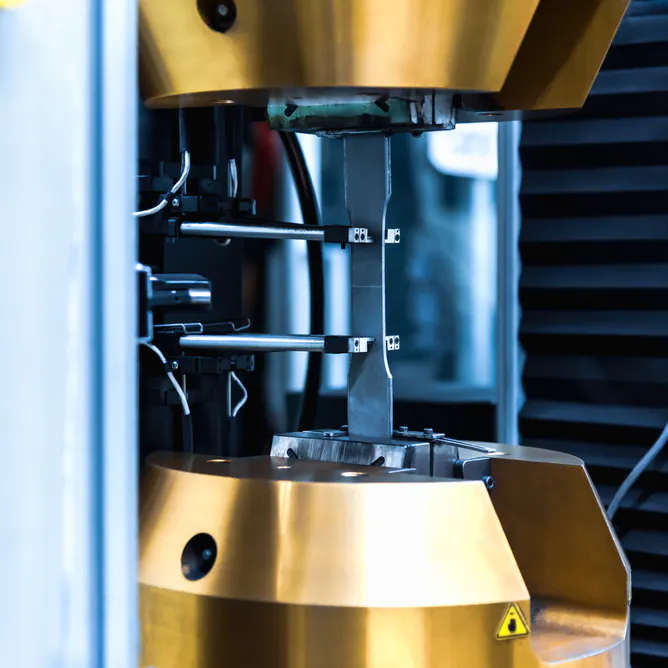
Lap shear testing measures the force required to break a bonded joint by applying a load parallel to the bonded surface. Engineers across manufacturing sectors depend on accurate bond evaluations to ensure structural integrity in high-performance assemblies. Adhesive bonding failures cause catastrophic damage in load-bearing applications, making reliable test data a foundational requirement. Industries from automotive to aerospace rely on standardized procedures to validate joint performance before components enter service. Construction firms evaluate structural adhesives through controlled shear loading to meet building codes and safety requirements. Metal substrates, composite panels, and polymer assemblies all undergo evaluation to confirm bond durability under mechanical stress. The relationship of the applied force and the bonded area determines whether a joint meets performance specifications. Composite materials present unique bonding challenges that require specialized evaluation protocols to capture accurate failure data. Strength evaluation methods follow precise procedural guidelines that enable repeatable, comparable results across laboratories. The data generated informs material selection, process development, and quality assurance decisions throughout the product lifecycle. Manufacturers targeting compliance with international quality certifications depend on rigorous procedural adherence during any lap shear test.
What is Lap Shear Testing and its Purpose?
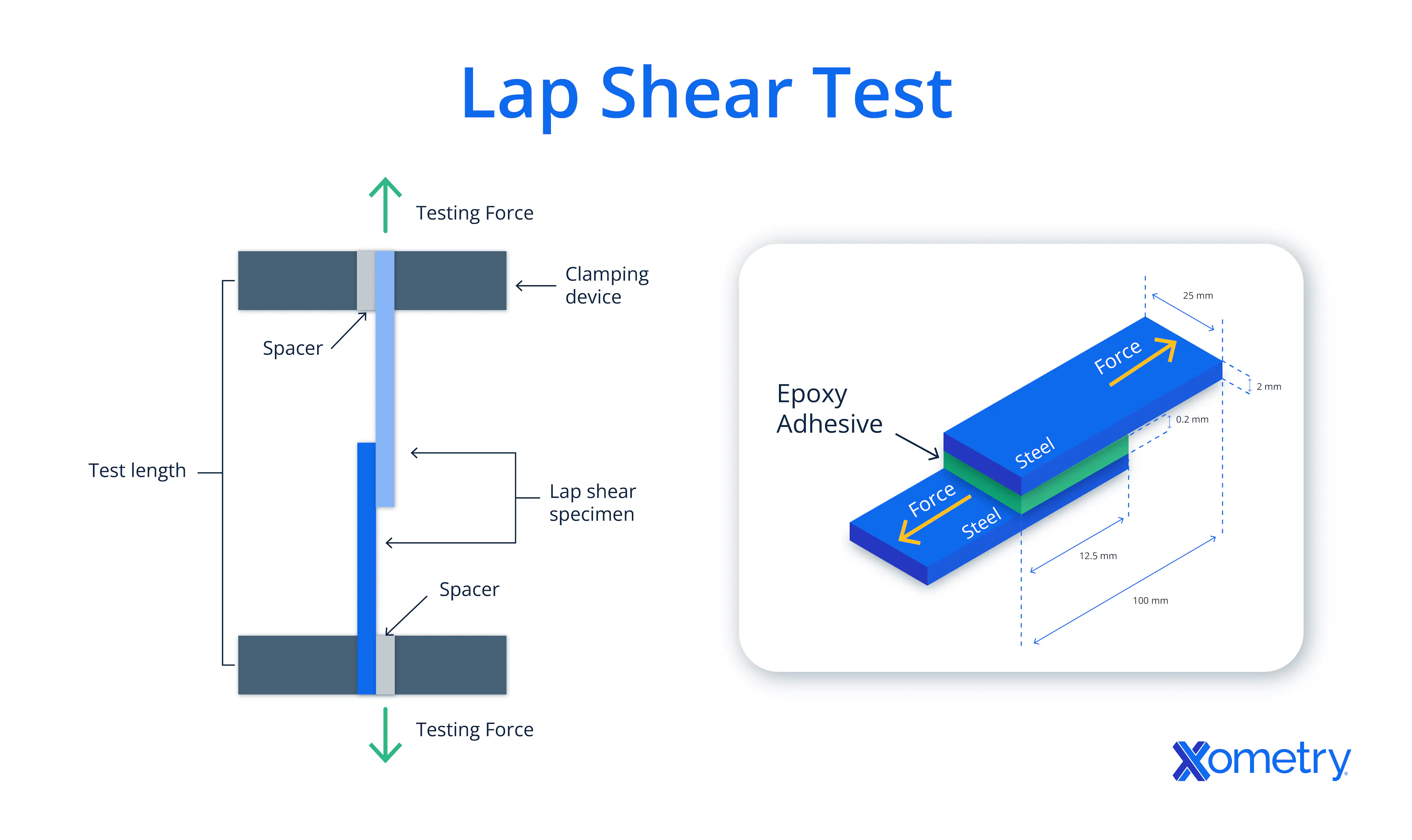
Lap shear testing measures the shear strength of a bonded joint by pulling two overlapping substrates in opposite directions along the adhesion plane. The two flat specimens are bonded over a defined overlap area and loaded until failure. The maximum force at failure, divided by the bonded area, gives the shear strength value in pressure units. The method evaluates joint integrity, showing how well adhesives or fastening systems perform under real-world conditions. Automotive manufacturers use lap shear testing to validate structural adhesives in body panels and crash-critical structures. Aerospace engineers rely on it to certify composite joints in airframes where bond failure is unacceptable. The lap shear testing, in construction, evaluates structural glazing and prefabricated panel connections. The test evaluates shear behavior while acknowledging inherent secondary peel forces, making results directly relevant to the joint pattern. Material scientists analyze failure patterns to improve adhesive formulations. The precision of the lap shear test makes it the preferred method for qualifying bonds across industries. Lap shear strength data support finite element models that predict structural behavior under service loads. Standardized procedures ensure consistency across labs and supplier qualification programs.
How Does a Lap Shear Test Work?
The lap shear test works by clamping two substrate specimens in opposing grips of a tensile testing machine, then applying a tensile load that forces the bonded overlap area to experience shear stress. The load acts parallel to the bonded interface, not perpendicular to it, which distinguishes shear testing from peel or tensile pull-off tests. Specimen geometry follows strict dimensional requirements, including defined overlap length, width, and total specimen length, to ensure consistent stress distribution across the bond area. Surface preparation directly affects bond quality, so substrates undergo cleaning, abrading, or chemical treatment before adhesive application. Fixture alignment keeps the load path centered on the specimen assembly, minimizing additional bending moments that would distort the measured failure load. The bonded assembly cures under controlled temperature and pressure conditions before testing begins. A crosshead moves at a fixed displacement rate while the load cell records force continuously until the joint fails. Peak load, displacement at failure, and load-displacement curve shape all contribute to the complete dataset. Failure surface inspection after testing identifies whether the adhesive, substrate, or interface zone controlled the fracture. The entire procedure demonstrates lap shear behavior under repeatable, controlled conditions that translate directly to engineering pattern data.
What Are the Required Materials and Test Specimens for Lap Shear Testing?
The required materials and test specimens for lap shear testing are listed below.
- Substrates: Substrates provide the structural base of the test specimen and include metals (aluminum and steel), as well as plastics, composites, and wood. Metal substrates ensure consistent surface quality and mechanical properties that minimize test variability. Plastic substrates introduce flexibility and surface energy factors that affect adhesive wetting and bond formation.
- Adhesives: Adhesives bond the overlapping substrate sections and include epoxies, acrylics, polyurethanes, cyanoacrylates, and structural film adhesives. Each adhesive class has a distinct shear response, failure strain, and temperature sensitivity. Adhesive selection must match the substrate material and intended service environment.
- Bond Dimensions: Bond dimensions define the overlap length and width, directly controlling the total bonded area used in strength calculations. ASTM standards set the dimensions to maintain comparable test results across laboratories. Variations in bond geometry introduce stress concentrations, lowering measured lap shear strength.
- Curing Conditions: Curing conditions control the time, temperature, and pressure applied to the bonded assembly before testing. Incomplete curing produces artificially low strength values that misrepresent adhesive performance. Controlled curing environments ensure adhesives reach full mechanical properties before testing.
- Surface Preparation: Surface preparation removes contaminants, oxides, and weak boundary layers before adhesive application. Methods (abrasion, solvent cleaning, acid etching, and plasma treatment) improve surface energy and mechanical interlocking. Consistent preparation protocols reduce data scatter and improve the reliability of test results.
Do All Lap Shear Specimens Require Controlled Bond Thickness?
Yes, all lap shear specimens require controlled bond thickness. The lap shear requires controlled bond thickness as the adhesive layer thickness directly influences stress distribution across the joint interface. Variable-bond lines alter stress distribution at the overlap edges, increasing the risk of premature peel-induced failure that misrepresents true shear capacity. Thick bond lines introduce more compliance into the joint, shifting the failure mode and artificially elevating displacement at failure measurements. Shim stock, wire spacers, or precision applicator nozzles maintain consistent thickness across the bonded area during specimen fabrication. Variability in thickness across the replicate specimens produces scatter in the dataset that obscures true material performance trends. Bond thickness specification appears explicitly in ASTM test standards for said reason, treating it as a controlled variable rather than an incidental parameter. Measured shear strength values from specimens with uncontrolled bond thickness cannot be validly compared across material systems, laboratories, or production batches.
"True structural integrity in a bonded assembly is rarely captured by the peak load alone; it requires a design that accounts for substrate deflection and the localized peel stresses inherent in single-lap geometries. By specifying precision bond-line spacers and validating surface energy compatibility during the DFM phase, engineers can prevent the parasitic bending moments that typically lead to premature joint failure in high-stiffness metal or composite interfaces."
Which ASTM Standards Govern Lap Shear Testing?
The ASTM standards provide the regulatory framework for evaluating the shear properties of bonded joints. ASTM D1002 covers the testing of metal-to-metal bonds using single-lap joints. ASTM D3163 addresses the shear strength of plastic-to-plastic joints with similar geometry. ASTM D5868 focuses on fiber-reinforced plastics and composite materials for automotive applications. ASTM D7616 assesses the shear performance of fiber-reinforced polymer matrix composite bars. ASTM F2255 utilizes a specific fixture for testing tissue adhesives in medical device development. The aforementioned protocols ensure that labs produce comparable data regardless of their physical location. Following the aforementioned rules eliminates bias from specimen preparation or loading rates. Reliable data acquisition depends on adherence to the ASTM lap shear protocols. Professional labs conduct the lap shear test, ASTM, to validate adhesive quality. Global industries rely on ASTM standards for safety compliance.
What is the Single Lap Shear Test Method?
The single lap shear test method evaluates the shear strength of a joint formed by overlapping two specimens. Technicians bond the coupons with a specific overlap area and pull them apart in a tensile tester. The load alignment is applied parallel to the substrates to evaluate shear performance. Stress distribution across the joint remains non-uniform due to the eccentricity of the load. High stress concentrations occur at the ends of the overlap area. The method is the most used because it reflects common industrial joint patterns. Manufacturers prefer the mentioned setup for its simplicity and cost-effectiveness in routine quality checks. The test reveals the effectiveness of the adhesive under typical structural loads. Engineers use the resulting data to set pattern limits for bonded assemblies. Consistent execution of the single lap shear test provides a baseline for material performance.
Are ASTM Standards Mandatory for Commercial Shear Testing Labs?
Yes, ASTM standards are effectively mandatory for accredited commercial shear testing laboratories. Commercial shear testing laboratories serving regulated industries must follow ASTM standards. The aforementioned laboratories provide data for product certification, supplier qualification, or legal compliance. Accreditation bodies (A2LA and ILAC) require accredited laboratories to demonstrate documented compliance with referenced test methods during assessments. Client purchase orders and quality agreements in aerospace, automotive, and medical device sectors explicitly cite ASTM document numbers as binding procedural requirements. Laboratories deviating from specified methods without documented justification produce data that procurement engineers and certification authorities reject as non-conforming. Calibration schedules, equipment maintenance records, and personnel training documentation all tie directly to the procedural requirements embedded in ASTM standards' mandatory compliance frameworks. Proficiency testing programs compare laboratory results against reference values derived from round-robin studies conducted under the same ASTM procedures. Commercial testing facilities without formal ASTM compliance face exclusion from approved supplier lists maintained by quality-conscious manufacturers.
What Are the Other Shear Testing Methods Used in Industry?
The other shear testing methods used in industry are listed below.
- Compressive Shear Test: The compressive shear test applies a compressive load to a bonded joint, creating shear stress at the adhesive interface. The method applies to sandwich panel core-to-facesheet bonds and wood composite assemblies. It significantly reduces peel stress, providing a more representative shear behavior in thick-section bonded structures.
- Dynamic Shear Test: The dynamic shear test applies oscillating loads to bonded joints to measure adhesive performance under cyclic stress.
- Automotive and aerospace assemblies face vibration, impact, and cyclic loading, making static data insufficient. A shear testing specialist selects the appropriate frequency ranges, load amplitudes, and cycle counts based on the service environment.
- General Shear Testing: General shear testing includes different procedures that evaluate shear strength in materials (adhesives, welds, fasteners, and laminated composites). Test geometries range from block shear fixtures to pin-loaded notched coupons, depending on the material and failure mode. Laboratories performing ASTM lap shear testing, alongside other shear methods, provide a comprehensive picture of joint performance under different loading conditions.
Do Dynamic Shear Tests Measure Performance Under Variable Load Conditions?
Yes, dynamic shear tests measure performance under variable load conditions. Dynamic shear tests evaluate adhesive and joint performance under variable load conditions that static tests cannot replicate. Static lap shear tests apply a monotonically increasing load until failure, capturing the peak strength under a constant rate of displacement. Dynamic tests expose bonded joints to repeated load cycles, impact pulses, or frequency-swept sinusoidal inputs that simulate actual service environments. Fatigue damage accumulates at adhesive interfaces under cyclic loading, even when peak stresses remain well below the static failure load. Frequency-dependent viscoelastic behavior in polymer adhesives causes energy dissipation and stiffness changes that solely appear under dynamic excitation. Engineers designing vibration-sensitive assemblies reference dynamic shear data alongside static lap shear ASTM results to fully characterize adhesive system performance. The combined dataset supports fatigue life predictions and durability assessments that inform maintenance intervals and structural warranty terms.
How is Lap Shear Strength Calculated?
Lap shear strength is calculated by dividing the maximum load recorded at joint failure by the total bonded overlap area, producing a result in units of pressure (megapascals or pounds per square inch). The formula is: shear strength equals maximum load divided by bonded area, where bonded area is the overlap length multiplied by specimen width. For example, a specimen with a 12.5 mm by 25.4 mm overlap has a bonded area of 317.5 square millimeters. A recorded peak load of 2,500 newtons on the specimen yields a shear strength of 7.87 MPa. Stress distribution across the overlap is non-uniform, with stress concentrations at the overlap ends causing local failure before the average stress reaches the material’s theoretical limit. Engineers compare results across geometrically identical specimens to account for the aforementioned stress concentrations. Longer overlap lengths decrease apparent strength due to more pronounced end-effect stress. Finite element analysis helps map the stress field for accurate failure predictions, helping engineers review how shear strength calculated values reflect real joint behavior.
What Factors Affect Lap Shear Strength?
The factors that affect lap shear strength are listed below.
- Adhesive Type: Adhesive chemistry determines the shear modulus, failure strain, and temperature resistance of the bond. Epoxies provide high strength but may fracture brittlely, while polyurethanes offer greater toughness and peel resistance. The adhesive must match the substrate's surface energy and the joint's mechanical demands.
- Surface Preparation: The condition of the substrate influences adhesion quality. Contaminants or oxide layers block molecular contact across the adhesive and substrate, lowering lap shear strength. Abrasion, acid etching, and plasma treatment increase surface energy, enhancing bond strength.
- Bond Line Thickness: Adhesive thickness affects stress distribution and failure behavior. Bond line thickness affects stress distribution; variations from the optimal thickness can increase stress concentrations at overlap ends. Thicker layers absorb energy before failure but may reduce peak load capacity in stiff joints.
- Curing Schedule: Cure time and temperature control the crosslink density in thermosetting adhesives. Under-cured adhesives retain unreacted monomers, weakening the bond. Higher cure temperatures improve crosslink density, improving stiffness and thermal resistance.
- Substrate Stiffness: Substrate stiffness affects bending at overlap ends during loading. Flexible substrates increase peel stress, lowering shear strength. Stiffer metals reduce bending, maintaining a more uniform shear stress distribution across the bond.
- Load Rate: The crosshead speed during testing impacts peak load measurements due to polymer adhesives' rate-dependent behavior. Faster loading rates elevate strength values by reducing viscous flow before failure. Standardized speeds ensure consistency across tests.
Does Increasing Bond Area Always Increase Lap Shear Strength?
No, increasing the bond area does not always increase lap shear strength. Increasing the bond area does not always lead to higher lap shear strength due to the non-linear distribution of stress. Stress concentrates at the ends of the overlap rather than being distributed evenly across the center. Increasing the overlap length beyond a certain point provides diminishing returns in load-bearing capacity. The center of a long overlap remains relatively unstressed while the edges reach their failure limit. Accordingly, the phenomenon leads to a decrease in the calculated average strength per unit area. Engineers refer to it as the "Volkersen" or shear-lag effect in structural joints. Large bond areas also increase the likelihood of including internal defects or voids in the adhesive. A proper joint pattern focuses on optimizing the overlap length for the specific substrate stiffness. Testing verifies the optimal dimensions for a given material combination. A reliable pattern requires understanding how geometry influences the failure point.
What Failure Modes are Observed in Lap Shear Testing?
The failure modes that are observed in lap shear testing are listed below.
- Adhesive Failure: Adhesive failure occurs when the fracture propagates along the adhesive-substrate interface, leaving one substrate clean and the other covered in adhesive. Clean surfaces after testing suggest poor preparation, contamination, or adhesive mismatch. The lap shear failure mode classification records adhesive failure as a surface-level bond deficiency rather than a bulk material limitation.
- Cohesive Failure: Cohesive failure occurs when the fracture propagates through the adhesive layer, leaving adhesive residue on both substrates. The aforementioned indicates the adhesive-to-substrate bond was stronger than the adhesive itself, a preferred failure mode in well-designed joints.
- Substrate Failure: Substrate failure happens when the fracture propagates through the base material, showing that the joint was stronger than the substrate. Fiber-reinforced composites exhibit interlaminar shear failure, while metals may yield or fracture depending on the alloy. It sets the upper limit for joint strength, confirming that the adhesive exceeded the substrate's capacity.
- Mixed-Mode Failure: Mixed-mode failure involves multiple failure types across the bond area, producing a fracture surface with adhesive, cohesive, and substrate failure zones. Inspectors quantify each failure type to determine the dominant mechanism. Mixed-mode results often indicate contamination, thickness variation, or stress concentration that caused localized premature failure.
Where is Lap Shear Testing Used in Industry?
The lap shear testing finds widespread use in aerospace, automotive, electronics, and construction industries. Aerospace manufacturers evaluate structural bonds for wings and stabilizers to ensure passenger safety. Automotive assembly plants test adhesives used in door panels and roof structures to reduce vehicle weight. The electronics sector uses the test to verify bonds in component housings and structural assembly interfaces. Construction firms assess the durability of sealants and structural glues for high-rise building facades. Safety-critical applications require documented proof of bond integrity before deployment. Quality certifications (AS9100 and IATF 16949) mandate regular testing of bonding processes. Accurate data prevents catastrophic failures in harsh environmental conditions. Engineers rely on the aforementioned metrics to select the best materials for extreme stress environments. Consistent testing ensures that manufacturing processes remain within specified safety tolerances.
How is Lap Shear Testing Applied in Manufacturing and Engineering?
Manufacturing and engineering apply lap shear testing to validate the performance of structural adhesives in complex assemblies. Aerospace engineers bond carbon fiber composites to titanium frames using high-strength resins. Automotive technicians replace spot welds with structural adhesives to improve the crashworthiness of modern vehicles. Electronics manufacturers test the shear resistance of solder joints and thermal interface materials. Construction teams use the data to design glass curtain walls that withstand high wind loads. The aforementioned lap shear industrial applications provide the empirical data needed for predictive modeling. Testing allows for the optimization of adhesive volume and joint geometry in mass production. Engineers use the results to troubleshoot bonding issues on the factory floor. Reliable shear data reduces the need for expensive over-engineering of mechanical joints. Systematic testing supports the development of lighter and stronger products across all sectors.
Is Lap Shear Testing Necessary for Aerospace Adhesive Approval?
Yes, lap shear testing is necessary for aerospace adhesive approval. Aerospace adhesive approval requires lap shear testing to meet strict regulatory and certification standards. The Federal Aviation Administration (FAA) requires comprehensive data on the mechanical properties of all structural materials. Adhesives must demonstrate consistent performance under extreme temperatures and static loads. Lap shear data provides the primary metric for evaluating the long-term durability of bonded joints in aircraft. Manufacturers conduct the aforementioned tests to earn Type Certification for new airframe designs. Failure to provide standardized test results prevents the legal sale or operation of the aircraft. Testing also identifies how environmental factors (humidity and de-icing fluids) affect bond strength. Rigorous validation ensures that secondary and primary structures remain intact during flight. Compliance with the standards protects lives and prevents expensive mid-air structural failures. Aerospace firms maintain detailed records of the aforementioned tests for quality auditing purposes.
How Do You Interpret Lap Shear Test Results?
Interpreting the lap shear test results involves analyzing the load-displacement curve to identify the point of failure. A steep curve indicates a high-modulus, brittle adhesive with little deformation before fracture. A gradual slope suggests a lower-modulus material, while the area under the curve indicates the energy absorbed through plastic deformation. High peak loads stand in for high shear strength, while the area under the curve indicates toughness. Engineers compare the aforementioned values against industry-specific tolerances to determine if a batch passes inspection. Acceptable limits vary significantly by application, with structural aerospace bonds often requiring values exceeding 20 to 30 MPa, depending on the material system. Identifying the failure mode provides insight into the health of the manufacturing process. Poor results commonly lead to an investigation of surface preparation or curing parameters. Detailed documentation of the findings constitutes the core of lap shear reporting. Accurate interpretation ensures that solely high-quality bonded assemblies reach the end-user.
How Do Commercial Shear Testing Services Ensure Quality?
Commercial shear testing services ensure quality by utilizing third-party labs with ISO accreditation. The aforementioned facilities use calibrated shear testers that undergo regular maintenance and certification. Technicians strictly follow ASTM and ISO standards to eliminate procedural errors. Specialized fixtures allow for the testing of unique specimen geometries and material combinations. Labs maintain controlled environments to prevent temperature or humidity from skewing the results. A shear testing specialist oversees the data acquisition to ensure accuracy and repeatability. Independent verification provides an unbiased assessment of adhesive performance for material manufacturers. Clients receive comprehensive reports that include statistical analysis of the test results. Professional labs invest in high-resolution sensors to capture subtle changes in joint behavior. Quality assurance protocols in commercial shear testing guarantee the reliability of the mechanical data.
What Performance Metrics are Compared in a Lap Shear Report?
The performance metrics that are compared in a lap shear report are listed below.
- Ultimate Lap Shear Strength: The value stands in for the maximum stress a joint withstands before total separation. It serves as the primary benchmark for comparing different adhesive formulations.
- Load at Failure: The testing machine records the peak force in Newtons or pounds-force at the moment of fracture. The raw data point allows for the calculation of all other lap shear metrics.
- Mode of Failure: Technicians categorize the break as adhesive, cohesive, or substrate failure. Identifying the mode helps engineers improve surface preparation or material selection for the lap shear report.
- Deformation at Failure: The measurement tracks the distance the specimens travel before the bond breaks. It indicates the ductility and elasticity of the adhesive material under stress.
- Shear Modulus: The metric describes the stiffness of the joint assembly, though standard lap shear geometry is often insufficient for calculating the true bulk modulus of the adhesive. It determines how much the bond deforms under a specific amount of applied force.
Can a Specimen Pass Strength Requirements but Fail Due to Poor Failure Mode?
Yes, a specimen can pass strength requirements but fail due to a poor failure mode. An adhesive failure mode suggests that the bond relies on weak surface contact rather than a strong chemical or mechanical link. Even if the peak load meets the design specification, the interface remains susceptible to environmental degradation. Cohesive failure is generally preferred because it indicates that the bond interface is stronger than the adhesive material. Substrate failure shows that the adhesive system exceeds the strength of the joined parts. Relying solely on a numerical strength value ignores the long-term reliability of the assembly. Moisture and temperature changes commonly cause rapid degradation of joints showing adhesive failure. Analyzing the fracture surface reveals hidden weaknesses in the production process. Engineers prioritize joints that exhibit predictable and stable failure characteristics over those with high but unstable strength values.
How Does Temperature Affect Lap Shear and PVC Materials?
Temperature significantly affects the lap shear strength of PVC and other thermoplastic materials. High temperatures cause PVC to soften and lose its structural rigidity. Accordingly, the thermal behavior leads to a decrease in the shear resistance of the joint. Adhesives also experience changes in their molecular structure when exposed to heat. Some polymers become brittle at sub-zero temperatures, leading to sudden fractures under load. Testing labs conduct evaluations across a range from -40 to 80 degrees Celsius to map performance. Maintaining material stability requires selecting adhesives with glass transition temperatures above the operating range. Engineers use the said data to predict the lifespan of PVC piping and structural panels in outdoor environments. Performance implications include the potential for joint creep at high temperatures or brittle fracture in extreme cold. Technicians follow the lap shear ASTM protocols to perform a standardized shear resistance test.
Why is Lap Shear Testing Widely Used in Footwear and Industrial Applications?
Lap shear testing is widely used in footwear and industrial applications since shear forces act directly on bonded joints during real-world use, making shear strength the most relevant performance measurement for the aforementioned sectors. Footwear sole-to-upper bonds experience shear-dominant stress during walking, running, and lateral movement, so manufacturers validate bond strength through direct shear evaluation before releasing products to market. Flexibility testing through lap shear methods confirms that adhesive joints maintain integrity across repeated bending cycles without delamination. Durability data from shear tests guides adhesive selection for industrial conveyor belts, panel assemblies, and modular construction components exposed to sustained mechanical loading. Safety footwear standards mandate documented shear strength values to confirm that bonded protective sole components survive occupational mechanical demands. Quality control programs embed lap shear batch testing into production release protocols, catching adhesive or process variation before defective assemblies reach the customer. Lap shear industrial use spans sole bonding certification, structural panel qualification, and process validation programs across manufacturing sectors worldwide.
What Does TPR-Laufsohle Mean in Footwear?
The TPR-laufsohle refers to a thermoplastic rubber outsole commonly found in German footwear manufacturing. The material combines the processing advantages of plastics with the performance characteristics of rubber. Engineers conduct lap shear testing on the mentioned soles to verify their bond with different upper materials. The "Laufsohle" term specifically denotes the part of the shoe that contacts the ground. TPR offers excellent slip resistance and durability in diverse weather conditions. Testing determines the optimal adhesive for securing the sole to the midsole. Material testing ensures that the bond withstands the repetitive stresses of walking and running. Results help manufacturers maintain high-quality standards for export markets. The lap shear performance of the aforementioned soles dictates the overall safety and comfort of the shoe. Understanding regional terminology allows for better collaboration across the international testing labs and footwear designers.
Summary
This article presented lap shear tests, explained them, and discussed how they're conducted and their various applications. To learn more about lap shear tests, contact a Xometry representative.
Xometry provides a wide range of manufacturing capabilities and other value-added services for all of your prototyping and production needs. Visit our website to learn more or to request a free, no-obligation quote.
Copyright and Trademark Notice
- KEVLAR® is a trademark of E. I. DuPont de Nemours and Company
Disclaimer
The content appearing on this webpage is for informational purposes only. Xometry makes no representation or warranty of any kind, be it expressed or implied, as to the accuracy, completeness, or validity of the information. Any performance parameters, geometric tolerances, specific design features, quality and types of materials, or processes should not be inferred to represent what will be delivered by third-party suppliers or manufacturers through Xometry’s network. Buyers seeking quotes for parts are responsible for defining the specific requirements for those parts. Please refer to our terms and conditions for more information.