What Is Swiss Machining How It Works and Uses


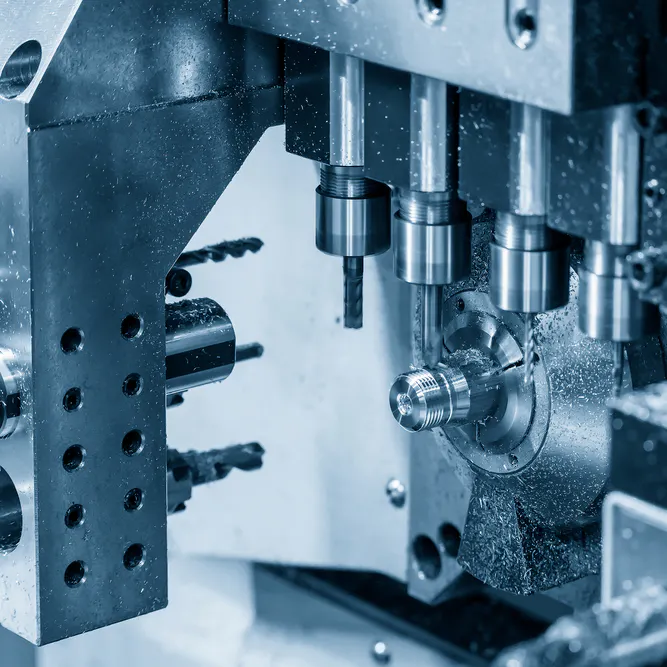
Swiss machining is a precision bar-fed turning process that produces small-diameter, high-complexity components using a sliding headstock and guide bushing support system. Swiss machining constrains the bar stock at the cutting interface and limits unsupported length to 1 to 2 times the bar diameter, which reduces bending forces and vibration during material removal. The sliding headstock advances material along the Z axis while multiple fixed and live tools execute turning, cross drilling, milling, and threading in one cycle. Dimensional tolerances commonly range from ±0.0002 inches (in) to ±0.001 in, depending on spindle accuracy, thermal control, and tooling rigidity. Surface finishes reach 16 microinch (µin) to 32 µin Ra under stable feed rates and sharp carbide tooling.
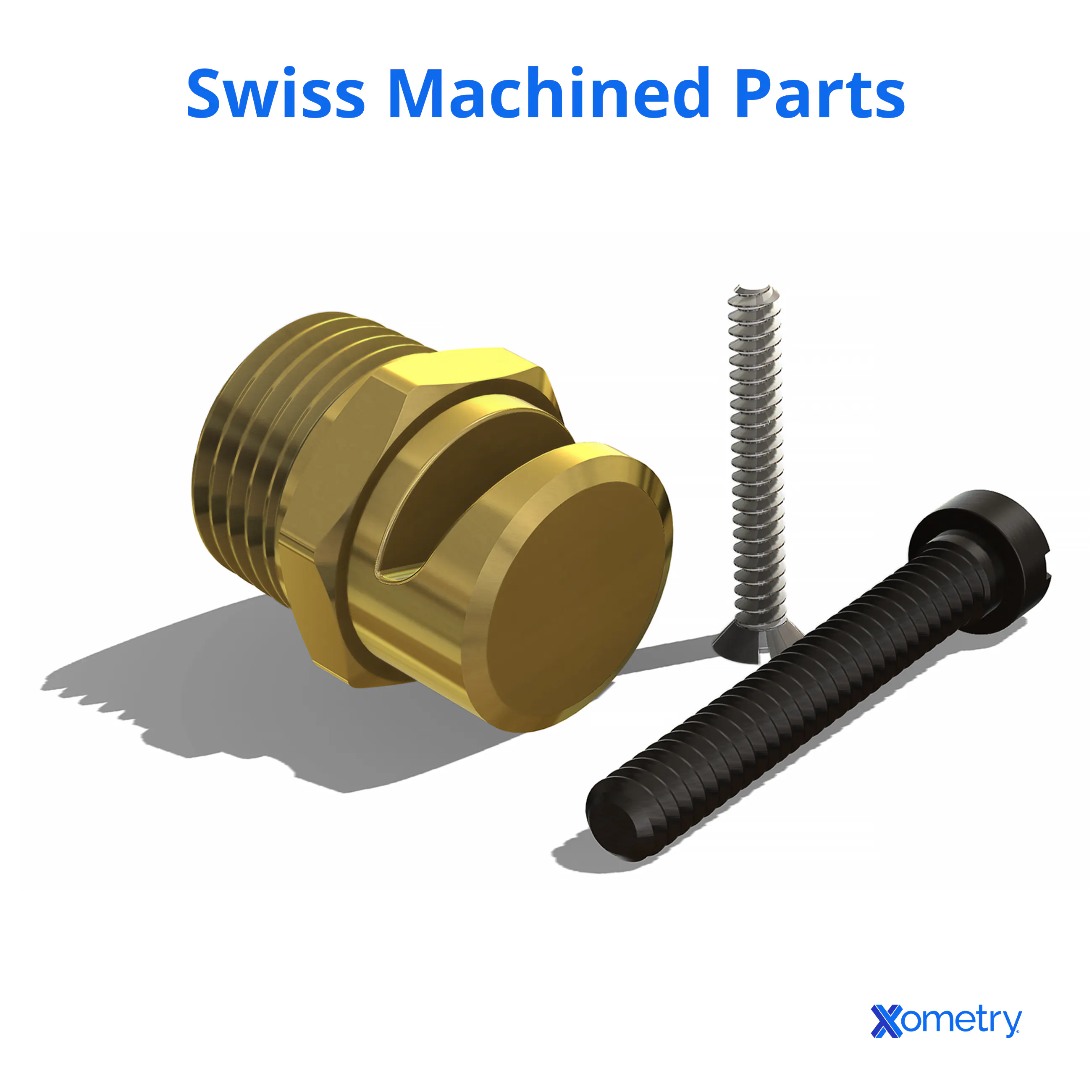
Swiss machining is applied to medical screws, orthopedic pins, aerospace fasteners, electrical connector pins, hydraulic fittings, and miniature shafts generally below 1.25 in diameter. Swiss machining supports materials including brass, copper, aluminum, titanium alloys, stainless steel, nickel alloys, nylon, and Polyether Ether Ketone (PEEK). The configuration maintains stability for parts exceeding 3:1 length to diameter ratios and sustains bar-fed production volumes beyond 10,000 units. Equipment investment exceeds [$150,000], and setup duration ranges from 2 hours to 8 hours per job.
What is Swiss Machining?
What is Swiss Machining? Swiss machining is a precision manufacturing process that uses a sliding headstock lathe and hardened guide bushing to produce small-diameter, complex components from bar stock. Swiss machining supports the material directly at the cutting plane, typically eliminating unsupported length between the tool and the guide bushing, which reduces radial deflection and vibration. The sliding headstock feeds the workpiece axially along the Z axis while multiple static and live tools perform turning, drilling, milling, and threading in a single setup. The process is designed for small, intricate parts that require tight concentricity and minimal runout.
Swiss machining achieves dimensional tolerances commonly ranging from ±0.0002 in to ±0.001 in, depending on spindle accuracy, tooling rigidity, and thermal stability. Surface finishes reach 16 µin to 32 µin Ra under controlled feed rates and optimized cutting speeds. The method is optimized for parts below 1.50 in diameter and supports continuous bar feeding for production volumes exceeding 10,000 components. High repeatability and stable support define the precision capability of Swiss machining.
How Does Swiss Machining Differ From CNC Machining?
Swiss machining differs from Computer Numerical Control (CNC) machining by structural configuration and material support method. Swiss machining is a specialized type of CNC machining optimized for small-diameter precision parts below 1.25 in. Conventional CNC lathes clamp material at one end, leaving unsupported stock extended into the cutting zone, which increases deflection risk for slender components when unsupported length exceeds a stable 3:1 length-to-diameter ratio without tailstock or steady rest support. Swiss machines use a sliding headstock and hardened guide bushing that support material directly at the cutting plane, effectively eliminating unsupported length between the bushing and the tool, which reduces radial deflection and vibration. The configuration enables tighter tolerances ranging from ±0.0002 in to ±0.001 in in controlled production environments. Standard CNC machining lathes handle larger diameters above 2.00 in and heavier components, whereas Swiss systems excel at slender parts with length to diameter ratios exceeding 10:1 within CNC machining.
Is Swiss Machining Used for High Precision Parts?
Yes, Swiss machining is used for high-precision components. The hardened guide bushing stabilizes the bar at the cutting interface and restricts unsupported length to a near-zero value, which lowers bending stress and dynamic vibration during cutting. Standard production tolerances typically fall between ±0.0002 in and ±0.001 in, depending, on spindle runout, tool wear condition, thermal growth management, and material behavior. Continuous support during axial feed improves circularity and concentric alignment on slender geometries. Surface finishes generally range from 16 µin to 32 µin Ra under stable feed rates and optimized cutting speeds. Industries including medical device manufacturing, aerospace hardware, precision electronics, and micro mechanical systems rely on the process for batch volumes exceeding 10,000 parts. Integrated live tooling and sub spindle transfer permit multiple operations within one machining cycle, which limits stack up error and strengthens repeatable precision output.
How Does Swiss Lathe Machining Work?
Swiss lathe machining works by feeding bar stock through a hardened guide bushing while tools machine the exposed portion of material. The sliding headstock advances the bar along the Z axis into the cutting zone rather than holding the workpiece stationary. The guide bushing supports the material directly at the cutting zone, minimizing radial deflection and vibration. Multiple tools operate sequentially or simultaneously to perform turning, drilling, threading, cross-drilling, and milling operations in one cycle. Live tooling and sub-spindles allow back-side machining without removing the part. Coolant stabilizes temperature and assists chip evacuation. Production tolerances range from ±0.0005 in to ±0.001 in, depending on setup and material properties.
What Makes Swiss Lathe Machining Different From Regular Lathes?
Swiss lathe machining differs from regular lathes because it uses a guide bushing and sliding headstock to support material directly at the cutting plane. Regular lathes clamp bar stock in a chuck or collet at one end and extend unsupported material into the cutting zone, which increases bending forces and deflection on slender parts. Swiss systems position the guide bushing immediately adjacent to the cutting tool, effectively eliminating unsupported length during material removal. The sliding headstock advances the workpiece longitudinally along the Z axis while multiple tools remain arranged around the cutting area. The configuration enables tighter production tolerances commonly between ±0.0005 in and ±0.001 in, depending on machine calibration, spindle accuracy, and thermal stability. The enhanced support improves dimensional control for long, thin components with length-to-diameter ratios exceeding 3:1.
Does a Swiss Lathe Use a Sliding Headstock?
Yes, a Swiss lathe uses a sliding headstock as a defining mechanical feature. The headstock advances bar stock longitudinally through a hardened guide bushing during machining operations. The guide bushing supports the material directly at the cutting plane, eliminating the cantilevered unsupported length found in conventional lathes, which reduces radial deflection and vibration. Unlike conventional lathes, where the workpiece remains clamped in a stationary spindle and tools travel along the axes, Swiss machines feed the material axially through the guide bushing while tools remain positioned around the cutting zone. The configuration improves dimensional control for slender components with length to diameter ratios greater than 3:1. Production tolerances commonly range from ±0.0002 in to ±0.001 in, depending on material properties, tooling rigidity, spindle accuracy, and thermal stability. Surface finishes reach 16 µin to 32 µin Ra under optimized feed rates and cutting speeds. The sliding headstock structure improves concentricity and repeatability during high-volume bar-fed production.
What is a Swiss Machine Used For?
A Swiss machine is used for manufacturing small, complex precision components from bar stock with high dimensional stability. The process performs turning, drilling, threading, cross-drilling, and milling in a single machining cycle. Typical components include surgical screws, orthopedic pins, aerospace fasteners, hydraulic fittings, connector pins, miniature shafts, and precision bushings. Part diameters remain below 1.50 in, with many applications under 0.75 in. Production tolerances commonly range from ±0.0002 in to ±0.001 in, depending on material selection and setup control. Continuous bar feeding systems support production volumes exceeding 10,000 pieces with consistent repeatability. Industries including medical device manufacturing, aerospace hardware production, electronics, and automotive systems depend on Swiss machines for concentric accuracy, surface finish capability near 16 µin to 32 µin Ra, and efficient high-volume precision manufacturing.
What Kinds of Parts are Made With a Swiss Machine?
The kinds of parts that are made with a Swiss machine are listed below.
- Surgical Screws: Surgical screws require precise thread geometry and dimensional tolerances within ±0.001 in to ensure proper fixation and compatibility with implants. Swiss machining provides stable support for small diameters under 0.50 in. Surface finishes between 16 µin and 32 µin Ra support biocompatibility requirements.
- Aerospace Fasteners: Aerospace fasteners demand tight concentricity and repeatable head dimensions. Swiss machines maintain tolerances near ±0.0005 in for miniature threaded components. The process supports high-strength materials, including titanium and stainless steel.
- Connector Pins: Electronic connector pins require consistent diameter control and smooth surfaces for conductivity. Swiss machining produces diameters under 0.25 in with minimal variation. Continuous bar feeding supports large batch production exceeding 50,000 units with consistent dimensional accuracy.
- Hydraulic Fittings: Hydraulic fittings require leak-resistant threads and concentric bores within ±0.001 in. Swiss machining maintains consistent sealing surfaces and supports carbon steel and stainless steel materials.
- Fuel Injector Components: Fuel injector parts require tight dimensional control within ±0.0005 in for proper atomization performance. Swiss machining supports diameters below 0.40 in and ensures repeatable geometry in high-volume production exceeding 100,000 units.
Is a Swiss Machine Mainly Used for Small Precision Parts?
Yes, a Swiss machine is mainly used for small precision parts. The guide bushing and sliding headstock configuration stabilize slender bar stock close to the cutting edge, reducing radial deflection during machining. Component diameters typically remain below 1.25 in, with many applications under 0.75 in. Dimensional tolerances in standard production commonly range from ±0.0005 in to ±0.001 in, depending on tooling condition, machine calibration, and material selection. Surface finishes can reach 16 µin to 32 µin Ra under optimized cutting parameters. The machine performs effectively for high-length-to-diameter ratio components greater than 3:1, where conventional lathes experience vibration and reduced concentricity. Continuous bar feeding supports production volumes exceeding 10,000 pieces with consistent repeatability. Larger components above 1.50 in diameter are less suitable because the sliding headstock and guide bushing assemblies are physically limited by the spindle bore diameter.
What Other Industries Use Swiss Machines?
Swiss machines are used across industries that require small, high-precision mechanical components with consistent dimensional repeatability. Medical manufacturing applies the process to surgical screws, orthopedic pins, implant hardware, and instrument shafts, where tolerances commonly range from ±0.0002 in to ±0.001 in. Aerospace production uses Swiss machining for fasteners, fuel system fittings, and miniature structural connectors produced from titanium and stainless steel. Electronics manufacturing depends on Swiss machines for connector pins, conductive contacts, and sensor housings with diameters frequently below 0.25 in. Automotive systems apply the process to fuel injector components, transmission pins, and hydraulic fittings requiring concentric stability. Defence and instrumentation sectors rely on Swiss machining for miniature mechanical assemblies and control components. Continuous bar feeding enables production volumes exceeding 10,000 pieces while maintaining repeatable geometry and stable surface finishes near 16 µin to 32 µin Ra under optimized machining parameters.
Which Industries Depend on Swiss Machining the Most?
The industries that depend on Swiss machining the most are listed below.
- Medical Industry: Medical device manufacturing depends heavily on Swiss machining for orthopedic screws, implant fasteners, catheter fittings, and surgical instrument shafts. Production tolerances commonly range from ±0.0005 in to ±0.001 in, depending on process control. Small diameters under 0.75 in benefit from guide bushing stabilization that maintains concentricity.
- Aerospace Industry: Aerospace manufacturing uses Swiss machining for miniature fasteners, fuel system connectors, and lightweight structural fittings. Materials include titanium and stainless steel alloys requiring stable machining support. Dimensional control typically remains within ±0.0005 in to ±0.001 in for critical components.
- Electronics Industry: Electronics production relies on Swiss machining for connector pins, conductive contacts, and sensor housings. Diameters frequently fall below 0.25 in, requiring minimal radial variation. High-volume runs exceeding 10,000 units maintain repeatability through continuous bar feeding systems.
- Precision Instrumentation: Instrumentation sectors use Swiss machining for miniature shafts, calibration components, and control mechanisms. Stable concentricity supports functional accuracy. Surface finishes reach 16 µin to 32 µin Ra under optimized machining parameters.
Are Swiss Machines Used in Medical Manufacturing?
Yes, Swiss machines are widely used in medical manufacturing for implants and surgical instruments that demand strict dimensional repeatability. Swiss machining commonly maintains production tolerances from ±0.0002 in to ±0.001 in under controlled thermal and tooling conditions, depending on part geometry, material properties, and inspection control. Orthopedic screws, bone pins, dental implants, and minimally invasive instrument shafts require concentricity, thread accuracy, and surface integrity to ensure functional alignment inside the human body. Surface finish influences wear behavior and biological response, and machining processes typically achieve 16 µin to 32 µin Ra before secondary finishing operations. The guide bushing supports small diameter bar stock typically below 1.25 in and eliminates unsupported length at the point of tool engagement, which reduces vibration when cutting titanium and medical grade stainless steel. Medical production environments incorporate process validation, dimensional inspection, and documented material traceability to comply with regulatory quality standards.
What are the Materials Suitable for Swiss Machining?
The materials suitable for Swiss machining are listed below.
- Copper: Copper is a conductive metal composed primarily of elemental copper with high electrical and thermal conductivity. The material machines effectively in small diameters under controlled feed rates and produces smooth surface finishes near 16 µin to 32 µin Ra. Guide bushing support minimizes deformation during the machining of soft copper alloys.
- Brass: Brass is an alloy of copper and zinc known for high machinability and dimensional stability. The material produces minimal tool wear and supports tight tolerances commonly between ±0.0002 in and ±0.001 in. Brass performs well in connector pins and precision fittings.
- Aluminum: Aluminum alloys (6061, 7075) provide lightweight strength and good machinability. Stable chip formation supports efficient high-volume production. Diameters under 1.50 in maintain concentric accuracy.
- Titanium: Titanium alloys offer a high strength-to-weight ratio and corrosion resistance. Lower thermal conductivity requires controlled cutting speeds. Swiss machining stabilizes slender titanium components during precision turning.
- Nickel Alloys: Nickel-based alloys resist heat and corrosion. Tool wear increases due to strength and hardness. Guide bushing support improves dimensional stability in miniature components.
- Engineering Plastics: Engineering plastics (nylon, acetal, PEEK) provide lightweight, corrosion-resistant properties. Dimensional control typically remains within ±0.001 in. Low cutting forces suit small-diameter parts.
- Carbon Steel: Carbon steel offers strength and moderate machinability. Heat-treated grades require rigid setups. Swiss machining supports repeatable tolerances within ±0.0002 in to ±0.001 in.
1. Copper
Copper is a non-ferrous metal composed primarily of elemental Cu with purity levels around 99.90% in common grades, including C110. The material has an electrical conductivity near 100% International Annealed Copper Standard (IACS) and a thermal conductivity of 401 Watts per meter-Kelvin (W per m·K). Copper has a density of 8.96 g per cm³ and a melting point of 1,085°C. Tensile strength ranges from 30,000 psi to 50,000 psi, depending on temper, while elongation can exceed 30%, indicating high ductility. Copper is suitable for Swiss machining because it provides low cutting resistance and stable chip formation during high-speed turning. The guide bushing supports small diameters below 1.50 in and reduces vibration during machining. The Copper Metal allows surface finishes between 16 µin and 32 µin Ra and supports spindle speeds from 2,000 to 6,000 revolutions per minute (rpm), making it effective for precision electrical pins and conductive components.
2. Brass
Brass is a copper-zinc alloy typically containing 60% to 65% copper and 35% to 40% zinc, with free machining grades such as C360 including approximately 2.5% to 3.7% lead to improve machinability. The material has a density of 8.40 g per cm³ and tensile strength commonly ranging from 50,000 psi to 75,000 psi, depending on temper condition. Electrical conductivity generally ranges from 23% to 28% IACS. Brass is highly suitable for Swiss machining because it produces short, controlled chips and maintains stable cutting performance at elevated spindle speeds. The guide bushing configuration supports small diameters below 1.50 in and reduces vibration during precision turning. Swiss machining of brass material routinely achieves tolerances from ±0.0002 in to ±0.001 in and surface finishes between 16 µin and 32 µin Ra in fittings, valves, and electrical components.
3. Nylon
Nylon is a synthetic polyamide polymer commonly available in grades including Nylon 6 and Nylon 6 to 6. Nylon 6 has a melting temperature near 220°C, while Nylon 6 to 6 melts between 255°C to 265°C. Density averages approximately 1.13 g per cm³. Tensile strength in dry as molded condition typically ranges from 10,000 psi to 12,000 psi, though moisture absorption between 1% to 3% can reduce mechanical strength and stiffness. Nylon Material is suitable for Swiss machining because it cuts with low tool wear and maintains stable chip formation at spindle speeds from 1,000 to 4,000 rpm, depending on diameter. The guide bushing supports small diameters below 1.25 in and improves dimensional consistency. Surface finishes between 32 µin to 64 µin Ra are commonly achievable in precision bushings and insulating components.
4. Titanium
Titanium is a high-strength, low-density metal with a density of 4.51 g per cm³ and a melting point near 1,668°C. Commercially pure grades provide tensile strength from 35,000 psi to 70,000 psi, while Ti 6Al 4V ranges from 130,000 psi to 150,000 psi, depending on heat treatment conditions. Thermal conductivity averages 6.7 W per m·K, which concentrates heat during machining. The titanium metal is suitable for Swiss machining when producing small diameter precision components below 1.50 in that require tolerances from ±0.0002 in to ±0.001 in. The guide bushing supports slender geometries and reduces deflection in high-strength materials. Surface finishes between 16 µin to 32 µin Ra are achievable with controlled feeds and sharp tooling.
5. Aluminum
Aluminum is a lightweight metal with a density of 2.70 g per cm³ and a melting point near 660°C. Common alloys, including 6061 T6, provide tensile strength ranging from 35,000 psi to 45,000 psi, while 7075 T6 can exceed 70,000 psi. Aluminum exhibits thermal conductivity near 167 W per m·K and electrical conductivity around 40% IACS, depending on alloy. The material offers strong corrosion resistance due to a natural oxide layer and maintains good ductility for precision forming. Aluminum metal is suitable for Swiss machining because it cuts with low resistance and supports high spindle speeds 3,000 to 8,000 rpm depending on diameter. The guide bushing stabilizes small diameters below 1.25 in and reduces vibration during high-speed turning. Swiss machining of aluminum routinely achieves tolerances from ±0.0002 in to ±0.001 in with surface finishes between 16 µin to 32 µin Ra.
6. Nickel
Nickel is a corrosion-resistant metal with a density of 8.90 g per cm³ and a melting point near 1,455°C. Commercially pure nickel provides tensile strength ranging from 55,000 psi to 75,000 psi, depending on processing conditions. Nickel demonstrates strong resistance to oxidation, alkaline environments, and many chemical exposures. Thermal conductivity averages approximately 90 W per m·K, which is lower than copper but higher than titanium. The nickel material is suitable for Swiss machining in small diameter precision components below 1.25 in that require stable dimensional control. The guide bushing configuration reduces deflection during the turning of slender geometries. Cutting speeds are lower than the aluminum, commonly ranging from 1,000 to 3,000 rpm, depending on diameter and alloy condition. Swiss machining of nickel can achieve tolerances from ±0.0005 in to ±0.001 in with surface finishes between 16 µin to 32 µin Ra under controlled cutting parameters.
7. Plastics
Plastics are synthetic polymer materials composed of long-chain hydrocarbons that can be classified into thermoplastics and thermosets. Common engineering plastics, including ABS, nylon, and polycarbonate, exhibit densities ranging from 0.90 g per cm³ to 1.40 g per cm³. Tensile strength typically ranges from 4,000 psi to 12,000 psi, depending on polymer type and reinforcement. Melting or glass transition temperatures vary from 100°C to 260°C. Plastics offer corrosion resistance, electrical insulation, and low-friction properties. The plastic material is suitable for Swiss machining when producing small diameter precision components below 1.25 in that require lightweight construction and electrical isolation. The guide bushing stabilizes slender geometries and minimizes chatter during turning. Controlled spindle speeds of 1,000 to 4,000 rpm help prevent melting and deformation. Swiss machining of plastics commonly achieves tolerances from ±0.001 in to ±0.003 in with surface finishes of 32 µin and 64 µin Ra, depending on material stability.
8. Carbon Steel
Carbon steel is an iron carbon alloy containing approximately 0.05 percent to 1.00 percent carbon, classified by carbon concentration and heat treatment response. Low carbon grades contain up to 0.30 percent carbon and provide tensile strength from 45,000 psi to 70,000 psi in normalized condition. Medium carbon grades range from 0.30 percent to 0.60 percent carbon and develop tensile strength from 70,000 psi to 120,000 psi after quench and temper processing, depending on section thickness and alloy additions. High carbon steel exceeds 0.60 percent carbon and increases hardness and wear resistance through martensitic transformation. Density averages 7.85 g per cm³, and melting temperature ranges from approximately 1,425 °C to 1,540 °C. Carbon steel performs effectively in Swiss machining for threaded shafts, dowel pins, and miniature fasteners below 1.25 in diameter. Guide bushing support limits deflection in slender parts and enables tolerances from ±0.0002 in to ±0.001 in. Surface finishes from 16 µin to 32 µin Ra are achievable under controlled feed rate and tooling conditions when machining carbon steel .
How Long Does the Swiss Machining Process Take?
The duration of the Swiss Machining process is listed below.
- Setup Time: Initial setup requires 2 to 8 hours, depending on tooling quantity, guide bushing alignment, program complexity, and first article validation. Complex multi-tool configurations with live tooling may extend setup beyond 8 hours.
- Cycle Time Per Part: Simple turned components may run between 10 seconds and 90 seconds per part. Complex parts involving cross drilling, milling, and threading may require 2 minutes to 6 minutes per cycle, depending on feature count and material hardness.
- Production Run Time: High-volume runs exceeding 1,000 parts can operate continuously for 8 hours to 24 hours with bar feeders. Unattended production overnight is common for stable processes.
- Secondary Operations: Swiss machining consolidates multiple operations into one cycle, reducing total manufacturing time by 40% to 60% compared to separate machining processes.
What Affects the Machining Time in Swiss Machining?
Factors affecting machining time in Swiss machining include part geometry, diameter, material type, feature count, and required tolerance. Simple cylindrical parts with minimal features can run in 10 s to 45 s cycles, while complex components with cross-drilling, milling flats, threading, and back-working operations may require 90 s to 300 s per cycle. Material properties significantly influence cutting speed, as brass and aluminum permit higher feed rates compared to titanium or nickel alloys. Tool changes, live tooling engagement, and sub-spindle transfers increase cycle duration. Production tolerances tighter than ±0.0005 in may require reduced feed rates and additional finishing passes. Swiss machines are optimized for continuous bar-fed production, which reduces handling time between parts. Initial setup time may range from 2 hours to 8 hours, depending on tooling configuration and program complexity, yet production improves once machining begins.
Can Swiss Machining Speed Up Production?
Yes, Swiss machining can speed up production, particularly for small-diameter, high-volume components. Continuous bar feeding eliminates manual loading between cycles, allowing unattended operation during extended runs. Simple parts may achieve cycle times between 10 s and 45 s, while moderately complex components may complete within 60 s to 120 s, depending on feature count and material. Multi-axis capability enables turning, drilling, milling, and threading in one setup, reducing secondary machining operations and handling time. Sub-spindles allow back-side machining within the same cycle, improving throughput. High-repeatability tolerances commonly ranging from ±0.0005 in to ±0.001 in minimize rework. Tool life monitoring and coolant control maintain process stability during production runs exceeding 10,000 pieces. Production efficiency improves further when using high-machinability materials such as brass or aluminum compared to titanium or nickel alloys.
"Optimizing for the Swiss platform necessitates a focus on the length-to-diameter ratio: by utilizing the zero-moment support of the guide bushing, engineers can maintain stringent GD&T requirements on slender geometries that would otherwise fail due to vibration-induced chatter. Successful DFM in this space relies on strategic feature sequencing to ensure that the material remains supported during high-pressure cycles (minimizing fatigue) while achieving a 'done-in-one' process flow that eliminates secondary handling errors."
How Accurate Is Swiss Machining?
Swiss machining achieves high dimensional accuracy due to guide bushing stabilization and sliding headstock support. The guide bushing positions the bar stock directly at the cutting zone, eliminating the cantilever effect and reducing radial deflection during material removal. Standard production tolerances commonly range from ±0.0005 in to ±0.001 in depending on tooling rigidity, spindle condition, and material selection. Tighter tolerances approaching ±0.0002 in may be achieved for short features under controlled thermal conditions with verified bar straightness and process monitoring. Concentricity improves because the workpiece remains continuously supported during machining. Surface finishes can reach 16 µin to 32 µin Ra under optimized cutting parameters. High repeatability across production runs exceeding 10,000 components supports consistent dimensional performance in medical, aerospace, and electronics manufacturing environments.
What Level of Precision can Swiss Machining Achieve?
Swiss machining achieves high precision through continuous material support at the cutting zone provided by the guide bushing and sliding headstock configuration. Standard production tolerances typically range from ±0.0005 in to ±0.001 in, depending on machine calibration, tooling rigidity, coolant control, and material stability. For short, well-supported features under controlled environmental conditions, tighter tolerances approaching ±0.0002 in may be achievable. Concentricity improves because radial deflection is minimized during turning operations. Surface finishes commonly range from 16 µin to 32 µin Ra under optimized feed rates and cutting speeds. Precision capability depends on bar straightness, diameter consistency, and temperature stability within the machining environment. Slender components with length-to-diameter ratios greater than 3:1 benefit significantly from stabilized support. High-volume production exceeding 10,000 parts maintains repeatable dimensional control when tooling wear is actively managed.
Can Swiss Machining Achieve Tight Tolerances?
Yes, Swiss machining achieves tight tolerances for small-diameter precision components. The guide bushing supports the bar stock within approximately 0.50 in of the cutting zone, minimizing radial deflection during material removal. Standard production tolerances typically range from ±0.0005 in to ±0.001 in, depending on tooling rigidity, spindle condition, and material characteristics. For short, well-supported features under controlled thermal conditions, tighter tolerances approaching ±0.0002 in may be achievable. Continuous material support improves concentricity and dimensional repeatability. Surface finishes commonly range from 16 µin to 32 µin Ra under optimized feed rates and cutting parameters. Tolerance capability depends on bar straightness, machine calibration, and consistent coolant temperature control. Swiss machining is frequently selected when miniature components require stable geometry and repeatable dimensional performance across production volumes exceeding 10,000 parts.
What are the Advantages of Swiss Machining?
The advantages of Swiss machining are listed below.
- High Dimensional Accuracy: Swiss machining achieves tight production tolerances of ±0.0002 in to ±0.001 in under stable spindle and thermal conditions. The guide bushing supports the bar directly at the cutting plane, effectively eliminating unsupported length between the support and the tool, which reduces vibration and radial deflection.
- Superior Stability for Slender Parts: The sliding headstock configuration maintains continuous axial support and enables machining of components with length-to-diameter ratios exceeding 10:1. The reduced unsupported span minimizes chatter during turning, threading, and micro drilling.
- Excellent Surface Finish: Swiss machining produces surface finishes typically ranging from 16 µin to 32 µin Ra under optimized feed rates and sharp carbide tooling. Fine finishes decrease secondary polishing requirements for medical and aerospace parts.
- Multi-Operation Capability: Swiss systems integrate turning, cross-drilling, milling, threading, and slotting within one machining cycle. Process consolidation reduces handling variation and improves batch consistency.
- High Volume Production: Continuous bar feeding enables unattended production runs exceeding 10,000 to 100,000 parts with consistent dimensional repeatability.
Why do Manufacturers Choose Swiss Machining?
Manufacturers choose Swiss machining when small-diameter components require consistent dimensional control and efficient high-volume production. The guide bushing supports material directly at the cutting zone, reducing radial deflection during machining of slender parts. Standard production tolerances typically range from ±0.0002 in to ±0.001 in, depending on material selection and machine calibration. Continuous bar feeding enables production runs exceeding 10,000 components with stable repeatability and reduced handling time. Multi-axis tooling allows turning, drilling, milling, and threading within a single setup, minimizing secondary operations and tolerance stack-up. Surface finishes commonly range from 16 µin to 32 µin Ra under optimized parameters. The sliding headstock configuration improves concentricity for parts with length-to-diameter ratios greater than 3:1, making Swiss machining suitable for medical, aerospace, and electronics manufacturing applications requiring reliable dimensional stability.
Does Swiss Machining Improve Part Consistency?
Yes, Swiss machining improves part consistency. The stabilized material support and controlled multi-axis machining improve part consistency. The guide bushing maintains the bar stock within approximately 0.50 in of the cutting zone, reducing radial deflection during turning operations. Standard production tolerances typically range from ±0.0002 in to ±0.001 in, depending on tooling condition, spindle calibration, and material properties. Continuous bar feeding supports repeatable dimensional output across production volumes exceeding 10,000 components without manual repositioning. Multi-axis capability allows complex features to be completed in a single cycle, reducing secondary handling and cumulative tolerance variation. Surface finishes commonly range from 16 µin to 32 µin Ra under optimized cutting parameters. Consistency depends on bar straightness, coolant temperature stability, and tool wear monitoring. The sliding headstock configuration supports concentric accuracy for slender parts with length-to-diameter ratios greater than 3:1.
What are the Disadvantages of Swiss Machining?
The disadvantages of Swiss machining are listed below.
- Higher Equipment Cost: Swiss machines require greater capital investment than conventional CNC lathes due to sliding headstock assemblies, precision guide bushings, and synchronized multi-axis tooling systems. Entry-level systems exceed [$150,000], and multi-channel machines with sub-spindles and live tooling frequently surpass [$400,000].
- Limited Part Size Capacity: Swiss machining is optimized for small diameter components below 1.25 in. Bar capacity commonly ranges from 0.125 in to 1.25 in, whereas parts above 2.00 in diameter are generally more efficient on conventional CNC lathes.
- Complex Setup Requirements: Swiss machines demand precise guide bushing selection, bar straightness control, and tool offset calibration. Setup duration commonly ranges from 2 hours to 8 hours, depending on part complexity and the number of tool stations.
- Material Waste in Short Runs: Bar-fed production improves efficiency in long runs, yet short batches generate remnant bar sections typically ranging from 5 in to 12 in per bar change.
- Geometry Limitations: Swiss machining favors rotational and slender geometries. Large prismatic cavities, deep pocket milling, and broad planar surfacing are more suitable for machining centers.
What are the Limits of Swiss Machining?
The limits of Swiss machining are diameter capacity, bar length constraints, and economic feasibility for low-volume runs. Swiss machines are used for bar diameters up to approximately 1.25 in, with maximum capacities near 1.50 in, depending on model specifications. Larger diameters reduce the stabilization advantage provided by the guide bushing and sliding headstock configuration. Very long components may exceed bar feeder length or require secondary support systems. Tight tolerances below ±0.0002 in require strict thermal control, bar straightness verification, and tool wear monitoring. Complex setups may require 2 hr to 8 hr of preparation time before production begins. The process is less efficient for short production runs where setup effort outweighs machining time savings. Swiss machining remains effective for small, high-volume precision components with length-to-diameter ratios greater than 3:1.
Is Swiss Machining more Expensive than Standard Machining?
Yes, Swiss machining is more expensive than standard machining. Setup time ranges from 2 hr to 8 hr depending on tooling arrangement and program configuration. Equipment investment for Swiss machines is higher due to guide bushing systems, multi-axis tooling capability, and sliding headstock mechanisms. Continuous bar feeding and single-cycle multi-operation machining reduce handling time and secondary processes in high-volume runs exceeding 10,000 components. Per-part cost decreases as production volume increases because dimensional repeatability reduces scrap and rework. For low-volume production, simpler CNC turning provides a lower total cost. Swiss machining becomes economically favorable when small diameter components require tolerances between ±0.0002 in and ±0.001 in with consistent repeatability.
What Is the Quality of Products Produced Through Swiss Machining?
The quality of products produced through Swiss machining is consistent with dimensional accuracy, stable concentricity, and controlled surface finish when properly configured. Standard production tolerances typically range from ±0.0002 in to ±0.001 in, depending on material, tooling rigidity, and machine calibration. The guide bushing supports bar stock directly at the cutting zone, eliminating unsupported length and reducing radial deflection to improve repeatability. Surface finishes can reach 16 µin to 32 µin Ra under optimized cutting parameters and stable coolant conditions. Continuous bar feeding enables consistent geometry across production runs exceeding 10,000 components without repositioning variation. Multi-axis tooling allows features to be completed in a single cycle, reducing secondary handling and tolerance stack-up. Product quality depends on bar straightness, tool wear monitoring, spindle condition, and environmental temperature stability during machining operations.
How does Swiss Machining Ensure High Quality Parts?
Swiss machining ensures high-quality parts through continuous material support, controlled multi-axis machining, and reduced radial deflection. Theguide bushing stabilizes bar stock directly at the cutting zone, minimizing vibration during turning operations. Standard production tolerances typically range from ±0.0002 in to ±0.001 in, depending on tooling condition, spindle calibration, and material properties. The sliding headstock configuration maintains concentricity for slender components with length-to-diameter ratios greater than 3:1. Surface finishes commonly reach 16 µin to 32 µin Ra under optimized feed rates and coolant control. Multi-axis tooling completes complex features in a single setup, reducing cumulative tolerance variation caused by repositioning. High-volume bar-fed production exceeding 10,000 components maintains dimensional repeatability when tool wear and thermal conditions are monitored consistently. Process stability and controlled cutting parameters directly influence final part quality.
Are Swiss Machine Products Durable?
Swiss machine products demonstrate durability when material selection, dimensional control, and surface finish align with application requirements. The machining process itself does not determine durability; mechanical properties depend on material grade, heat treatment condition, and part geometry. Production tolerances commonly range from ±0.0005 in to ±0.001 in, ensuring proper fit and load distribution in assemblies. Materials frequently processed include stainless steel, titanium, carbon steel, and nickel alloys, each selected for strength, corrosion resistance, or fatigue performance. Surface finishes between 16 µin and 32 µin Ra support consistent contact surfaces in mechanical interfaces. Dimensional repeatability reduces misalignment that could accelerate wear. Durability is therefore achieved through controlled machining parameters combined with appropriate alloy selection and post-processing treatments when required.
When to use Swiss Machining
Swiss machining is used when producing small-diameter components that require stable dimensional control and high production repeatability. The process is most effective for bar diameters up to approximately 1.50 in, with many applications under 0.75 in. Standard production tolerances typically range from ±0.0005 in to ±0.001 in, depending on setup quality and material selection. Components with length-to-diameter ratios greater than 3:1 benefit from guide bushing stabilization, which reduces radial deflection during cutting. High-volume production runs exceeding 10,000 pieces justify setup times ranging from 2 hr to 8 hr. The process is suitable when multiple features (turning, drilling, milling, threading) must be completed in a single cycle to minimize secondary operations. Swiss machining is commonly selected for medical, aerospace, electronics, and instrumentation components requiring concentric accuracy and repeatable geometry.
How Xometry Can Help
If you need further clarification on the topic of Swiss machining, why not reach out to one of our representatives? Xometry also offers a plethora of related services, including CNC machining, laser cutting, and 3D printing. You can get your project started as soon as possible by requesting a free, no-obligation quote directly from our website.
Disclaimer
The content appearing on this webpage is for informational purposes only. Xometry makes no representation or warranty of any kind, be it expressed or implied, as to the accuracy, completeness, or validity of the information. Any performance parameters, geometric tolerances, specific design features, quality and types of materials, or processes should not be inferred to represent what will be delivered by third-party suppliers or manufacturers through Xometry’s network. Buyers seeking quotes for parts are responsible for defining the specific requirements for those parts. Please refer to our terms and conditions for more information.